

For those receiving Supplemental Security Income (SSI), a car accident settlement can complicate eligibility due to strict income and asset limits. Besides, these two sources of assistance can intersect in complex ways. Unlike Social Security Disability Insurance (SSDI), which is an earned benefit, SSI is needs-based. This means income and assets directly affect different eligibility requirements for benefits. Receiving a personal injury settlement could impact your SSI benefits if not handled carefully.
Meeting SSI Eligibility: How to Manage Your Assets Supplemental Security Income (SSI) is a vital program designed to assist individuals with limited income and resources. However, to qualify for SSI, you must meet specific eligibility criteria, and your assets are a crucial factor in determining your qualification. Let’s break down how SSI eligibility works and how you can manage your assets to ensure you receive the benefits you need.
SSI Eligibility: Who Qualifies?
To be eligible for SSI, you must meet several key requirements:
- Age or Disability: You must either be 65 or older, or disabled. In some cases, blind individuals can also qualify.
- Income Limits: SSI is designed for those individuals who don’t earn more than $2,019 from work each month
- Citizenship: You must be a U.S. citizen or national. Certain non-citizens may also qualify if they meet specific criteria.
- Residency: You must reside in the U.S. to be eligible for SSI benefits.
- Living Arrangements: Your living situation may also affect your eligibility. Individuals living in institutions or receiving housing assistance may face reduced benefits.
Asset Limits: What You Can and Can’t Have
One of the most critical factors in SSI eligibility is your assets. SSI has strict limits on the amount of resources you can own, and these limits can vary depending on your living situation.
- Resource Limits: For individuals, the limit is $2,000 in countable assets. For couples, the limit is $3,000. Countable assets include cash, bank accounts, real estate, and other items of value.
- Exempt Assets: Some assets do not count toward the resource limit. These include:
- Your primary home (if you live in it)
- Personal items like clothing and household goods
- One vehicle (if it’s used for transportation)
- Life insurance policies with a total face value of less than $1,500
- Types of Countable Assets: These can include savings accounts, retirement funds, and property not used as your primary residence. It’s essential to keep track of all your assets and consider their impact on your eligibility.
Managing Assets to Maximize SSI Eligibility
If you’re close to the asset limit, there are strategies you can consider to maintain your SSI eligibility:
- Spend Down Excess Assets: If your assets exceed the limit, consider spending down the excess on allowable expenses, such as medical bills or home repairs. However, be cautious—large gifts or transfers can be viewed as attempts to reduce assets artificially, which may affect eligibility.
- Establish a Special Needs Trust: A special needs trust allows you to protect your assets while maintaining eligibility for SSI. It’s crucial to consult with an attorney to ensure the trust is set up correctly.
- Use Exempt Assets Wisely: Take advantage of assets that are not counted, such as your primary home or a single vehicle. If you have other properties, consider selling or transferring them to bring your resources in line with SSI requirements.
How Car Accident Settlements Affect Your SSI Benefits?
 Receiving a car accident settlement can provide significant financial relief, especially when it comes to covering medical expenses, lost wages, and other damages. However, if you are receiving Supplemental Security Income (SSI), a personal injury settlement may affect your eligibility or the amount of your benefits. It’s essential to understand how these settlements interact with SSI and what steps you can take to protect your benefits.
How Car Accident Settlements Can Affect SSI?
SSI is a needs-based program designed to help individuals with limited income and resources. Unlike Social Security Disability Insurance (SSDI), which is based on your work history, SSI eligibility depends on your income and assets. Here’s how a car accident settlement might impact your SSI payments:
- Lump-Sum Payments Are Considered Income: A personal injury settlement amount is often considered a lump-sum payment and may count as income in the month you receive it. This could temporarily push your income above the SSI limits and result in a reduction or suspension of benefits for that month. It’s crucial to report the settlement to the Social Security Administration (SSA) as soon as you receive it.
- Impact on Asset Limits: SSI also has strict asset limits. For an individual, the maximum allowable assets are $2,000, and for a couple, it’s $3,000. A car accident settlement may put you over these limits, affecting your continued eligibility for SSI and the federal benefit rate. The SSA will consider the settlement as part of your resources, which could lead to the suspension of your benefits until you spend down the excess assets.
- Medically Necessary Expenses: Certain expenditures related to the settlement, like medical bills or necessary equipment for recovery, may be excluded from the asset calculation if used within a specified time. However, careful documentation and reporting are key to ensuring these funds don’t impact your SSI benefits.
What Can You Do to Protect Your SSI Benefits?
To avoid complications with your SSI benefits after receiving a car accident settlement, take the following proactive steps:
1. Report the Settlement to the SSA
It’s crucial to notify the SSA about the settlement as soon as possible. This helps ensure that your benefits are correctly adjusted, and you avoid penalties or overpayments. Be transparent about the amount of the settlement and how you plan to use it. Additionally, consider seeking legal advice to navigate any potential challenges with your benefits.
2. Spend the Settlement Wisely
If the settlement is considered income or assets, you can spend it down in ways that do not affect your SSI eligibility. Here are a few strategies:
- Pay Medical Expenses: If the settlement is used for medical care, rehabilitation, or other necessary medical expenses, it may not count toward your asset limit.
- Repair or Upgrade Your Home: You can use the funds for essential repairs or improvements to your home.
- Purchase Essential Items: Buying necessary items, such as clothing, household goods, or a vehicle, may help reduce your countable assets.
3. Consider Setting Up a Special Needs Trust
A special needs trust can protect your assets while allowing you to maintain your SSI eligibility. The trust is designed to hold funds in a way that does not count against the SSI asset limit. However, this requires legal guidance, and it’s essential to set it up correctly to ensure compliance with SSI regulations.
4. Track and Document All Expenses
Keeping accurate records of how you spend your settlement is crucial. If you use the funds for medical or necessary expenses, you must be able to provide documentation to the SSA if they request it.
5. Consult with a Professional
Navigating the intersection of car accident settlements and SSI benefits can be complex. Consulting with an attorney or financial advisor who specializes in SSI can help you make informed decisions about your settlement and protect your benefits.
How Can You Preserve Your SSI Benefits After a Settlement?
 A car accident settlement can impact your SSI benefits, but with careful planning, you can preserve your eligibility. Here are key strategies to protect your SSI benefits after a settlement.
1. Report the Settlement to the SSA Immediately
It’s essential to notify the Social Security Administration (SSA) as soon as you receive a settlement. Failing to report it can result in penalties or overpayments. The SSA will need details about the amount and nature of the settlement to adjust your benefits accordingly.
Action:
- Inform the SSA directly after receiving the settlement.
- Provide necessary documentation, like the settlement agreement or proof of payment.
2. Spend the Settlement on Exempt Expenses
If your settlement pushes you over the asset limit for SSI, you can reduce your countable assets by using the funds for approved expenses. The SSA does not count certain expenditures, such as medical costs, home repairs, and necessary personal items, toward the asset limit.
Action:
- Use the settlement for medical expenses, rehabilitation, or necessary treatments.
- Pay for home repairs or essential personal items.
3. Consider a Special Needs Trust
A Special Needs Trust (SNT) allows you to keep the settlement funds without affecting your SSI eligibility and Medicaid benefits. The trust holds the assets in a way that doesn’t count against the asset limit, helping you retain your benefits while still benefiting from the settlement.
Action:
- Consult an attorney to set up a Special Needs Trust for the settlement funds.
- Ensure the trust is structured to comply with SSA rules.
4. Use the Funds Strategically
If you prefer not to use a trust, you can spend the settlement on allowable expenses to reduce your assets. The key is to spend down the funds within a reasonable timeframe to avoid exceeding the asset limits.
Action:
- Spend down the settlement on necessary expenses to stay under the asset limit.
- Avoid unnecessary purchases that could push you over the limit.
5. Consider Timing the Settlement
If possible, you can time the settlement to minimize its impact on your SSI benefits. For example, receiving the settlement at the start of a month may give you more time to spend down the funds before the next SSI evaluation.
Action:
- If possible, coordinate the timing of your settlement to maximize the spending period.
What Are The Legal Considerations When Receiving a Settlement?
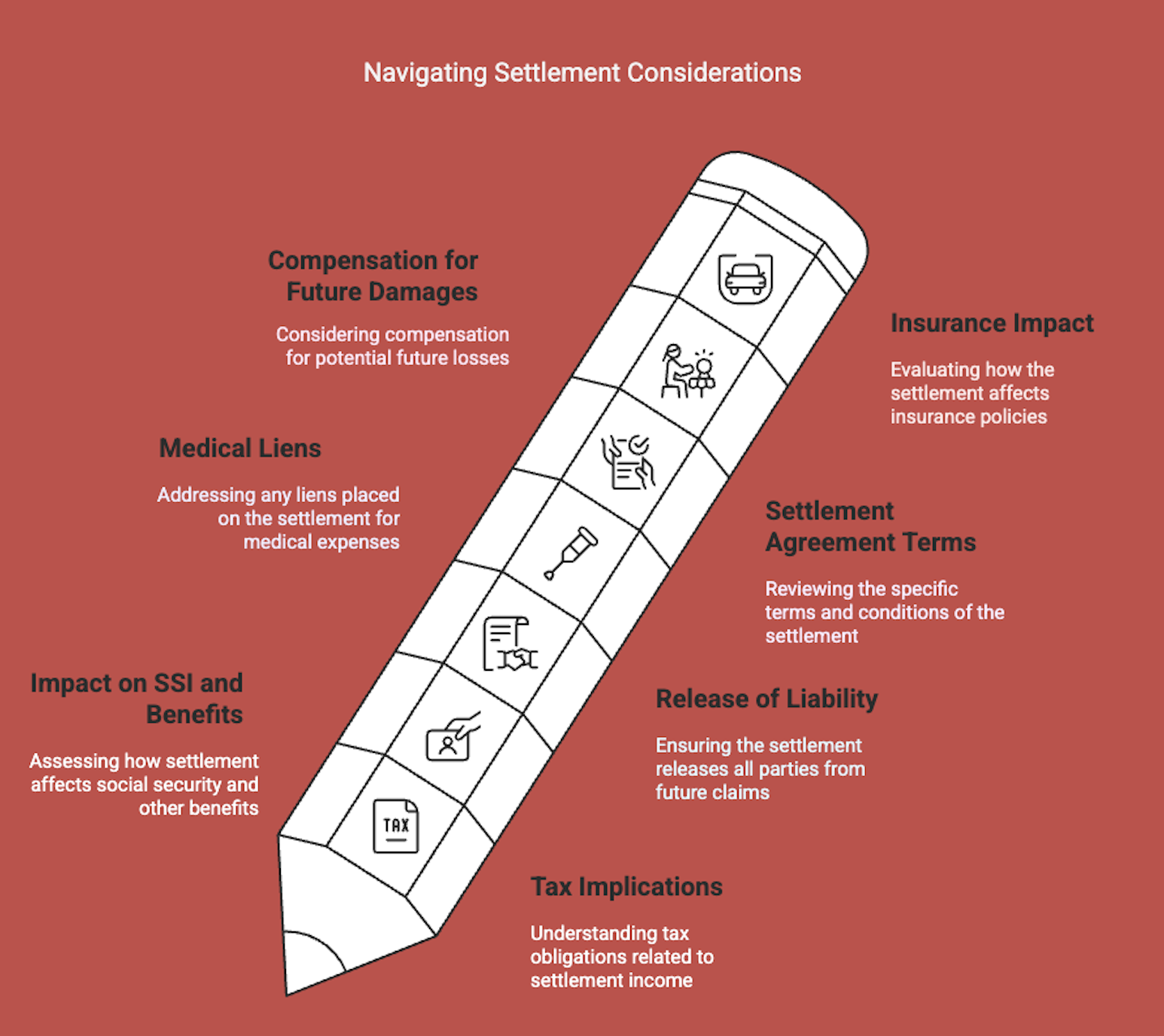 Receiving a settlement with an insurance company from a car accident or personal injury case can provide financial relief, but it’s important to understand the legal aspects to protect your rights and benefits. Here are key considerations to keep in mind:
1. Tax Implications
While most personal injury settlements are not taxable, portions covering lost wages or punitive damages may be. Consult with a tax professional to determine if any part of your settlement is taxable.
2. Impact on SSI and Benefits
A settlement could push your assets over the SSI limits, affecting eligibility. Report the settlement to the SSA and consider using strategies like a Special Needs Trust to protect your benefits.
3. Release of Liability
Accepting a settlement typically means you waive your right to pursue further claims. Carefully review the release clause in your settlement agreement before signing.
4. Medical Liens
Healthcare providers or insurers may have liens on your settlement to recover costs for medical treatment. Work with your attorney to address these liens before finalizing the settlement.
5. Settlement Agreement Terms
Ensure you understand the payment terms of the settlement, including whether it’s a lump sum or structured payment. Review the agreement with your attorney for clarity.
6. Compensation for Future Damages
If your settlement includes compensation for future expenses, ensure it adequately covers potential future medical needs and lost wages. Consult with experts if necessary.
7. Insurance Impact
Settling may affect your ability to claim additional insurance benefits or impact future premiums. Review your policy and consult your attorney for guidance.
Settle Smarter with Titanium Law’s Expert Legal Guidance
At Titanium Law, we provide expert legal support to help you navigate the complexities of receiving a settlement offer. Our experienced team is here to ensure your rights are protected and that your financial future remains secure. Here’s how we can help:
- Tax Implications: We’ll help you understand which parts of your settlement may be taxable and ensure proper reporting.
- Medical Liens: Our team works to address and negotiate medical liens, ensuring you get the most out of your settlement.
- Release of Liability: We’ll review your settlement agreement to ensure you fully understand the implications before signing.
- Future Damages: We ensure your settlement accounts for future medical needs and lost wages, with expert guidance on compensation.
- Insurance Impact: We’ll help you navigate any potential issues with insurance claims or premiums resulting from your settlement.
Trust Titanium Law to help you protect your rights and make informed decisions. Contact us today for professional legal assistance tailored to your settlement needs. Schedule a free consultation today.
Conclusion
Navigating SSI benefits after a personal injury settlement can be tricky—but with the right strategy, it’s manageable. Settlements may affect your benefits, potentially leading to a loss of benefits, but tools like Special Needs Trusts or structured payouts can protect your eligibility. Every case is different, so working with experienced personal injury lawyers and attorneys is key. They’ll help you assess your settlement, handle reporting, and guide you through the legal maze. Stay informed, plan smart, and protect your financial future.
Frequently Asked Questions
How does a car accident settlement affect my SSI?
A car accident settlement is considered as an addition to your income and assets. If the settlement amount exceeds the asset limits defined by the SSA, it could affect your SSI benefits, possibly leading to reduction, suspension, or termination, especially if part of the settlement is viewed as income.
What precautions should I take after receiving a settlement?
Post receiving a settlement, promptly report the same to the SSA, manage your funds wisely by exploring options like a Special Needs Trust, and engage with an attorney to navigate through this process without affecting your SSI benefits.
Can creating a trust help protect my SSI benefits?
Yes, creating a Special Needs Trust is a common strategy utilized to protect against the loss of SSI program benefits upon receiving personal injury settlement funds. This trust, as one of several legal solutions, allows the settlement funds to be used for approved expenses without affecting SSI eligibility.
What should I report to the Social Security Administration after a settlement?
After receiving a settlement, promptly report the settlement amount to the SSA. Also, provide detailed documentation specifying how the settlement proceeds are proposed to be used.
What is the maximum car value allowed under SSI rules?
SSI does not count one vehicle, regardless of its value, as long as it is used for transportation for the recipient or a member of the recipient’s household.
Will I lose my SSI benefits if I receive a personal injury settlement?
A personal injury claim and settlement increase your countable income and assets due to its strict income implications. Its impact on your SSI monthly benefits depends on how you manage these funds. With adequate planning, you may avoid losing your SSI benefits.
How are most personal injury settlements calculated and awarded?
Personal injury settlements are usually calculated based on several factors, like medical costs, property damage, lost income and wages, and pain and suffering resulting from incidents such as a motorcycle accident. These settlements can be awarded as a lump sum or through structured payments over time.