

Losing a loved one in a car accident is an unimaginable tragedy—especially when that loss is caused by someone else’s negligence or reckless behavior. In legal terms, this is known as a wrongful death. While no financial settlement can truly compensate for the emotional devastation, pursuing a claim can provide surviving family members with a measure of justice and much-needed financial relief.
A wrongful death claim allows loved ones to hold the at-fault party accountable, establish liability, and recover damages for the economic and emotional hardship caused by the fatal crash. But navigating this process is often overwhelming—particularly during a time of grief.
State laws differ on who can file, how damages are calculated, and how much time you have to act. That’s why legal guidance matters. This blog walks you through everything you need to know about wrongful death claims after a car accident—so you can make informed decisions and protect your family’s future.
Wrongful Death Claims Explained: Core Legal Concepts
A wrongful death claim following a car accident centers on a fatality caused by another party’s negligence, recklessness, or intentional misconduct.
These claims are designed to help surviving family members or the decedent’s estate recover financial compensation for both tangible and emotional losses.
To succeed, the claim must establish several critical elements:
- Duty of care owed by the at-fault party
- Breach of that duty through negligent or reckless behavior
- Causation linking that breach directly to the fatality
- Damages suffered as a result
- Proof of death caused by the incident
Understanding these principles is the first step toward navigating a successful claim.
What Legally Qualifies as Wrongful Death?
In car accident cases, wrongful death may arise from:
- Drunk or impaired driving
- Speeding or reckless driving
- Distracted driving
- Failure to follow traffic laws
- Manufacturer defects (e.g., faulty brakes or airbags)
Legal Terms You Should Know
Here are some foundational terms that play a critical role in wrongful death cases:
| Term | Description |
|---|---|
| Negligence | The failure to act with reasonable care. This is the core of most wrongful death claims related to auto accidents. |
| Damages | The financial compensation awarded to survivors. These may include medical expenses, funeral costs, lost income, and emotional suffering. |
| Statute of Limitations | The legal deadline for filing a lawsuit. In most states, this ranges from 1 to 3 years after the date of death. Missing this window typically bars the claim. |
Who Can File a Wrongful Death Claim in Texas?
Under the Texas Civil Practice and Remedies Code § 71.004, only specific individuals are legally entitled to file a wrongful death lawsuit following a fatal car accident. These include:
- Surviving Spouse: Both legally married and common-law spouses (if the common-law relationship meets Texas legal criteria).
- Children: This includes both biological and legally adopted children, regardless of age.
- Parents: Biological or adoptive parents of the deceased may bring a claim, including in cases where the deceased was unmarried or without children.
If none of these immediate family members files a wrongful death claim within three calendar months of the death, the executor or personal representative of the deceased’s estate may file the lawsuit—unless instructed not to by the surviving eligible family members.
Who Is Not Eligible?
- Siblings (biological or adopted) and grandparents are not permitted to file a wrongful death lawsuit in Texas, regardless of their relationship or emotional closeness to the deceased.
For families unsure about eligibility or the legal process, it’s highly recommended to consult a Texas-based wrongful death attorney like those at Titanium Law Firm, who can guide you through state-specific requirements and ensure no deadlines or rights are missed.
Settlements vs. Trials in Wrongful Death Claims
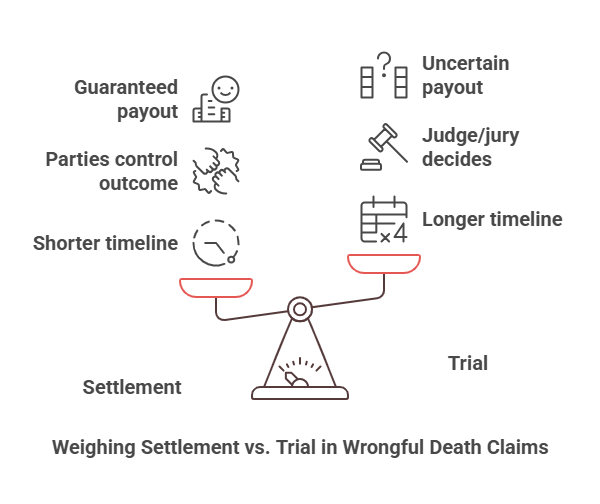
Most wrongful death claims resolve through out-of-court settlements. Settlements are often preferred because they save time, reduce emotional strain, and avoid the unpredictability of a trial.
However, when liability is disputed, the damages are contested, or the insurer refuses a fair offer, taking the case to trial becomes necessary.
Key differences:
| Aspect | Settlement | Trial |
|---|---|---|
| Timeline | Months (6–18 months on average) | 1–4 years or more |
| Control | Parties negotiate the outcome | Judge/jury decides the outcome |
| Payout Amount | May be lower, but guaranteed | Potentially higher, but uncertain |
| Emotional Strain | Lower | Higher due to public testimony and delays |
If the case proceeds to trial, your attorney will gather expert witnesses, prepare depositions, and represent your interests in court. While more demanding, trials may result in larger compensation, especially if punitive damages are pursued and awarded.
Also Read- What to do after a car accident in Texas that is not your fault?
Common Causes of Wrongful Deaths in Car Accidents
Wrongful deaths in car accidents often stem from a combination of negligent behavior and mechanical failure. Below are the most frequent contributing factors:
- Distracted Driving – Includes texting, using a phone, eating, or any activity that diverts attention from the road.
- Driving Under the Influence – Alcohol or drug impairment slows reaction times and impairs judgment, significantly increasing the risk of fatal crashes.
- Speeding – Driving at excessive speeds reduces a driver’s ability to react to sudden hazards and increases the severity of impact in a collision.
- Reckless Driving – Behaviors such as aggressive lane changes, tailgating, road rage, and ignoring traffic signals often lead to catastrophic accidents.
- Fatigue or Falling Asleep at the Wheel – Drowsy driving impairs awareness and slows response times, especially during long or overnight drives.
- Failure to Obey Traffic Laws – Ignoring stop signs, red lights, yield rules, and other traffic regulations can lead to fatal T-bone or head-on collisions.
- Brake Failure – A malfunctioning brake system can render a vehicle uncontrollable, particularly at high speeds or in traffic-dense areas.
- Tire Blowouts or Defects – Sudden tire failure, especially at highway speeds, can cause loss of control and rollovers.
- Airbag Malfunction – Defective airbags may fail to deploy or deploy improperly, increasing the risk of fatal injury.
- Steering or Suspension Issues – Mechanical defects in steering columns or suspension components can cause sudden swerving or loss of control.
When wrongful death occurs due to mechanical defects, the liability may extend beyond the driver to include the vehicle manufacturer or part supplier—especially if the product failed to meet safety standards.
Evaluating Compensation in a Wrongful Death Claim
Determining compensation in a wrongful death case accounts for both financial losses and the emotional toll suffered by surviving family members. These damages are intended to restore—at least in part—the financial stability and emotional well-being disrupted by the loss.
A wrongful death settlement may include:
- Lost future income and financial support
- Medical expenses incurred before death
- Funeral and burial costs
- Emotional pain and suffering of the survivors
- Punitive damages in extreme cases of gross negligence
Given the complexity of evaluating each component, working with an experienced wrongful death attorney is essential to ensure no element is overlooked during calculation or negotiation.
Types of Damages in a Wrongful Death Case
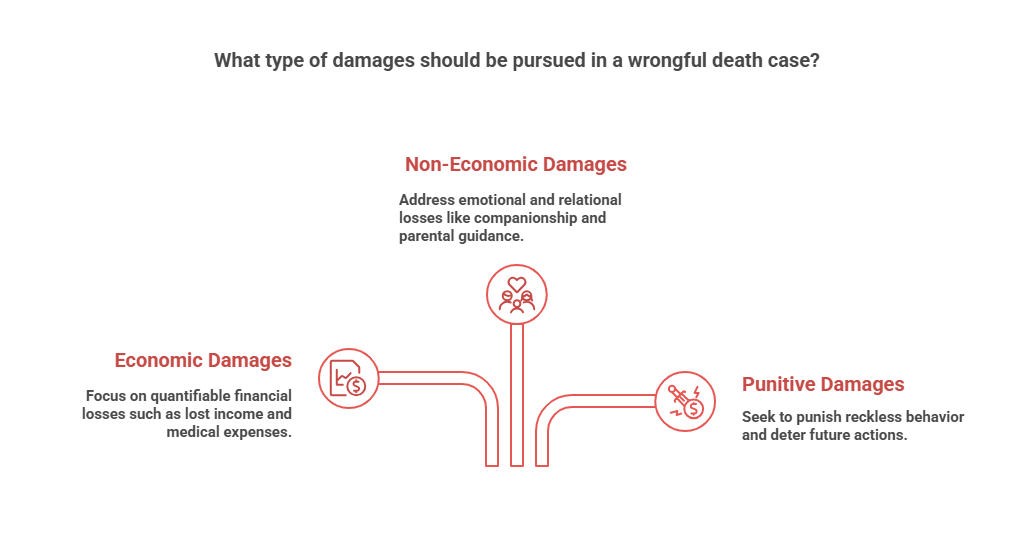
Wrongful death damages are categorized into three primary types:
1. Economic Damages
These are quantifiable financial losses, including:
- Lost earning capacity: Future income the deceased would have earned
- Medical expenses: Bills for treatment received prior to death
- Funeral and burial costs: All costs associated with memorial and interment
- Loss of household services: If the deceased provided caregiving, childcare, or household contributions
2. Non-Economic Damages
These address the emotional and relational loss suffered by the family:
- Loss of companionship and consortium
- Loss of parental guidance and support
- Mental anguish and emotional suffering
- Loss of care and nurturing from the deceased
These damages are more subjective, but they often represent the deepest impact on the survivors’ lives.
3. Punitive Damages
Punitive damages are rare but powerful. They are awarded when the at-fault party’s behavior was especially reckless or intentional—such as in cases involving DUI or extreme negligence. These damages are not meant to compensate the family, but to punish the wrongdoer and deter similar actions in the future.
What Affects the Settlement Amount?
Several factors can influence the final compensation value in a wrongful death case:
| Factor | How It Impacts the Settlement |
|---|---|
| Deceased’s Earnings | Higher lifetime earnings increase the projected financial loss and raise the overall claim value. |
| Age and Health | Younger, healthier individuals often lead to higher compensation due to longer life expectancy. |
| Number of Dependents | More dependents may justify greater financial recovery to reflect their loss of support. |
| Degree of Liability | Clear proof of fault results in stronger claims; shared fault can reduce the payout proportionally. |
| Insurance Company Behavior | Insurers may dispute claims or downplay losses to lower settlements unless aggressively challenged. |
| State Jurisdiction | Local laws and precedents can significantly affect the type and amount of recoverable damages. |
How Insurance Policy Limits Affect Compensation
Even in cases of substantial loss, compensation is often limited by the at-fault driver’s auto insurance policy limits. These caps dictate how much the insurer is legally obligated to pay per person and per accident.
Example:
If the policy limit is $50,000 per person / $100,000 per accident, and your damages exceed these amounts, your recovery may be restricted—unless alternative sources are pursued.
What Can Be Done When Policy Limits Are Low?
Your attorney can explore options like:
- Suing the defendant personally if they possess significant assets
- Filing under your own uninsured/underinsured motorist (UIM) coverage
- Pursuing compensation through the at-fault party’s umbrella insurance policy, if one exists
Also Read- Can parents be sued for a child’s car accident in Texas?
Pursuing Fair Compensation After a Fatal Car Accident in Texas
Losing a loved one in a car accident is emotionally devastating—and often brings unexpected financial challenges. While no legal outcome can make up for that loss, securing fair compensation can provide families with financial stability and a sense of justice.
Here are important steps that can help ensure your claim reflects the full extent of your loss:
1. Consult an Experienced Wrongful Death Attorney Early
Legal guidance from the start helps protect your rights, avoid missed deadlines, and ensure your claim is presented thoroughly and thoughtfully.
2. Preserve All Relevant Evidence
Collect police reports, medical records, accident reconstructions, and eyewitness statements. These materials help establish fault and support your claim.
3. Keep Detailed Records of Expenses
Document medical bills, funeral costs, and any changes to your household finances. These records illustrate the tangible impact of the loss.
4. Reflect the Emotional Toll
Maintain notes or a journal about the emotional, psychological, and lifestyle effects of the loss—this can support claims for non-economic damages such as grief and loss of companionship.
5. Consider Counseling
Grief counseling can not only support healing but also serve as documentation of emotional hardship when relevant to your claim.
6. Describe the Deceased’s Role
Clearly outline the financial and personal contributions of your loved one. This shows the depth of loss experienced by those left behind.
7. Identify All Potentially Responsible Parties
In some cases, liability may extend beyond the driver to other entities (like employers or manufacturers), which can provide additional avenues for compensation.
8. Review All Offers Carefully
Resist pressure to settle quickly. Work with your attorney to review the full extent of your losses and make sure any settlement truly reflects them.
Legal Process for Filing a Wrongful Death Claim
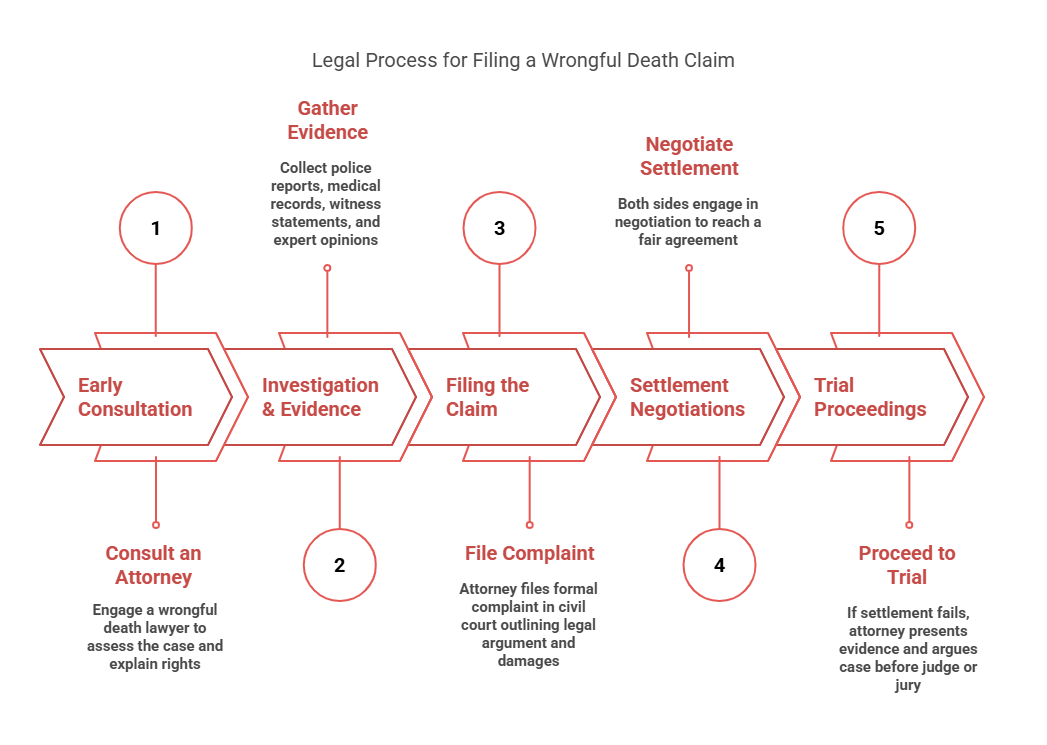 While many cases are resolved through settlements, some may require going to court—especially when there’s disagreement over fault or compensation. Working with an experienced attorney ensures the process is followed correctly and your family’s rights are protected.
Each case begins with careful evaluation and progresses through structured legal procedures. Here’s how the process typically unfolds:
1. Consult an Attorney
Engage a wrongful death lawyer as early as possible. They’ll assess the circumstances of the case, explain your rights, and advise on potential legal strategies.
2. Case Investigation and Evidence Gathering
Your attorney will collect essential documentation, such as:
- Police and accident reports
- Medical and autopsy records
- Witness statements
- Expert opinions (e.g., accident reconstruction or medical professionals)
This phase is critical in establishing fault and proving the scope of your loss.
3. Filing the Claim
Once evidence is in place, your attorney will file a formal complaint in civil court. This outlines your legal argument, identifies the at-fault party, and details the damages being sought.
4. Settlement Negotiations
Before going to trial, both sides typically engage in negotiation. Many cases settle here, sparing families the emotional and financial strain of a court case. Your attorney will work to secure a fair offer that reflects both economic and emotional losses.
5. Trial Proceedings (If Needed)
If a settlement can’t be reached, the case proceeds to trial. Your attorney will:
- Present evidence
- Examine witnesses
- Argue your case before a judge or jury
While trials can be lengthy and emotionally taxing, they may lead to higher awards—especially in cases where punitive damages apply.
Filing a wrongful death lawsuit is a complex legal journey. A skilled attorney provides more than legal support—they offer guidance, protection, and a path forward during a deeply difficult time.
At Titanium Law, we work closely with grieving families in Texas to handle every aspect of the process—from investigating the cause of death to negotiating fair compensation—so you can focus on healing while we advocate for justice on your behalf.
Challenges Faced During the Legal Process
Pursuing a wrongful death lawsuit is rarely straightforward. Families often encounter a range of legal and emotional challenges that can complicate the path to resolution:
- Insurance Delays and Denials
Insurers may attempt to minimize payouts by delaying responses, disputing claims, or undervaluing damages—especially in high-stakes cases. - Emotional Burden on Families
Grieving survivors are forced to relive painful details while navigating paperwork, timelines, and legal procedures. The emotional toll can be overwhelming. - Extended Legal Timelines
Complex cases or contested liability may result in lengthy legal battles, especially if the case proceeds to trial or an appeal. - Family Disagreements
Disputes may arise over how the lawsuit should be handled or how any eventual settlement should be distributed. These internal conflicts can increase tension during an already difficult period.
These challenges prove why compassionate, experienced legal representation is critical. Amid grief, families shouldn’t have to decode insurance loopholes, battle paperwork, or shoulder legal strategy alone.
Why Most Families Settle for Less—And How Titanium Law Changes That
By the time families reach the negotiation table, they’re already worn down, exhausted by paperwork, overwhelmed by grief, and unsure if pushing back is even worth it.
Insurers know this.
They bank on it.
Which is why most wrongful death settlements fall short—not because the case is weak, but because the survivors are isolated, underinformed, and emotionally spent.
Titanium Law exists to flip that dynamic.
We don’t just represent your claim—we reframe it. That means:
- Anticipating insurer tactics before they’re deployed.
- Quantifying long-term emotional and financial ripple effects—not just immediate losses.
- Identifying overlooked sources of compensation—whether it’s umbrella coverage, third-party liability, or survivor benefits.
We’re not here to tell your story for you. We’re here to make sure it’s heard, valued, and settled with dignity.
If you’ve made it this far into the process, don’t carry the rest of it alone. Let’s talk—confidentially, without commitment, and always with respect for your loss.
Book a free consultation here.
Conclusion
The aftermath of a fatal car accident brings not only emotional devastation but also complex legal and financial challenges. Wrongful death claims serve as a civil remedy to address these losses—offering eligible survivors a legal pathway to recover both economic and non-economic damages. However, success depends on timely action, detailed evidence, and a strong understanding of liability frameworks and insurance coverage limits.
Given the procedural intricacies—from proving negligence to calculating damages and negotiating within insurance policy boundaries—professional legal guidance is essential. A qualified wrongful death attorney can provide strategic oversight, reduce procedural missteps, and improve the likelihood of securing a settlement that fully reflects the scope of the loss.
Ultimately, pursuing a wrongful death claim is not just about compensation—it’s about ensuring accountability, financial stability for surviving dependents, and a measure of closure in the face of irreparable loss.
Frequently Asked Questions
How long do wrongful death settlements usually take?
The average wrongful death settlement timeline varies widely based on the complexity of the case, disputed liability, and insurance negotiations. On average, a wrongful death car accident lawsuit may take anywhere from one to four years—from the filing of a personal injury claim to final resolution. Delays can arise if the other driver’s insurance company disputes fault, challenges the value of your claim, or offers less than full compensation. Consulting an experienced car accident lawyer early can help reduce delays and preserve your rights.
Can any family member initiate a wrongful death claim?
Not all family members are eligible to take legal action under wrongful death law. Typically, only the surviving spouse, children (biological or adopted), or parents of the deceased may file a car accident claim. Some states permit legal representatives or financial dependents to step in if no eligible family member acts within a certain timeframe. Understanding your rights under minimum liability insurance policies and state-specific rules is essential—often best guided by a car accident attorney who specializes in wrongful death settlement amounts.
What are the tax implications for receiving a wrongful death settlement?
In most cases, the average payout from a wrongful death settlement is not taxable when it covers economic losses such as medical costs, burial expenses, or future financial support. However, any punitive damages or interest earned may be subject to tax. If your settlement includes components beyond basic medical care or property damage, it’s wise to consult a tax professional to ensure full compliance.
How is the amount of compensation determined in a wrongful death case?
The average wrongful death settlement amount is determined by multiple factors including the deceased’s earning potential, medical treatment before death, burial expenses, and the emotional toll on survivors. Courts and attorneys may use the per diem method or a multiplier approach to assign value to emotional distress.
Can a wrongful death settlement be appealed or contested?
Yes, either party in a wrongful death law dispute can appeal a settlement or trial verdict. Common reasons include procedural errors, newly discovered evidence, or perceived undervaluation of personal injury claims and wrongful death settlement amounts. However, appeals often prolong the process and may delay emotional closure and future financial support. It’s best to weigh this decision carefully with guidance from a seasoned car accident attorney, who can assess whether the appeal improves the value of your claim or risks the average settlement already negotiated.