

Shoulder pain after a car accident can be easy to ignore—until lifting a grocery bag, reaching overhead, or getting dressed becomes an ordeal. What feels like soreness at first could actually be a torn rotator cuff, a serious soft-tissue injury that can drastically affect your mobility, work, and daily comfort.
Rotator cuff injuries caused by car accidents often go undiagnosed in the early days—yet they require months of therapy, and in many cases, surgery. If your shoulder injury was caused or worsened by a crash, you’re likely wondering what kind of settlement you could expect—and whether the insurance company will take your pain seriously.
In this guide, we break down everything you need to know about rotator cuff tear car accident settlements—from average payout ranges and surgery impact, to how to prove the injury was caused by the crash and not a prior condition. If you’re dealing with long-term shoulder pain, here’s how to protect your rights and pursue a settlement that truly reflects your recovery.
Understanding Rotator Cuff Injuries After a Car Accident
The rotator cuff is a group of four muscles and tendons that stabilize the shoulder joint and enable arm movement—especially lifting, rotating, and reaching. This structure is both powerful and delicate, making it particularly vulnerable during sudden, forceful movements like those in a car accident in Texas.
How Car Accidents Can Tear a Rotator Cuff
In a collision, your body reacts instinctively. You might grip the wheel tightly or brace against the dashboard. These defensive actions can cause extreme strain on the shoulder joint—especially with the force of impact pushing the body against the seatbelt. This can lead to partial or full-thickness tears of the rotator cuff tendons, even without direct trauma to the shoulder.
Common Symptoms After a Crash
Many victims don’t immediately realize they’ve torn their rotator cuff. The symptoms can build over days or weeks and include:
- Persistent shoulder pain, especially at night
- Difficulty lifting or rotating the arm
- Weakness when performing overhead tasks
- Clicking or popping sounds with movement
- Limited range of motion
In some cases, the injury may initially be diagnosed as a sprain or strain—delaying appropriate treatment and complicating your legal claim.
Why Rotator Cuff Injuries Are Complex in Car Accident Claims?
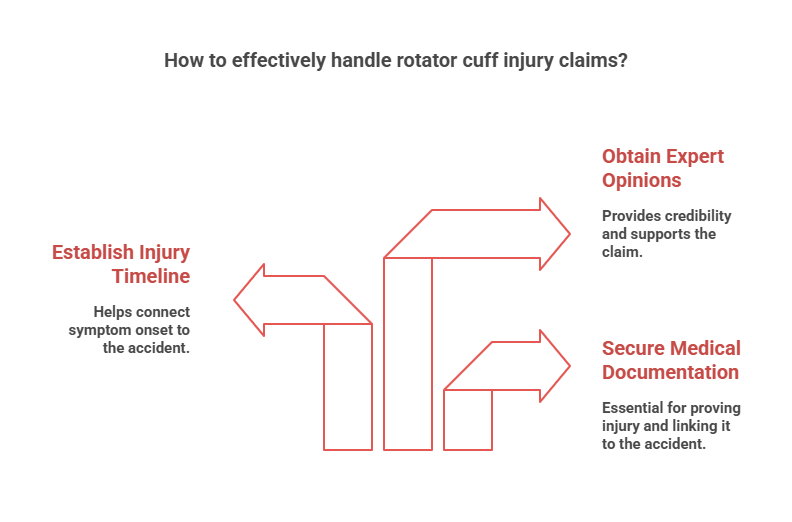
Rotator cuff tears present a unique challenge in car accident settlements—not because they aren’t serious, but because they don’t always show up clearly or immediately on medical scans. This makes them harder to “prove” to an insurance adjuster looking for hard, objective evidence.
1. Delayed Diagnosis and Imaging Limitations
Soft tissue injuries like rotator cuff tears often require an MRI to confirm. Unlike broken bones that appear clearly on X-rays, tendon damage can be subtle or missed without advanced imaging. Some injuries aren’t diagnosed until after weeks of physical therapy fail—or until an orthopedic surgeon investigates further.
This delay can give insurers an opening to question the cause of the injury.
2. Insurance Company Doubt
Insurers are notoriously skeptical of soft tissue claims. Without visible bruising or immediate ER records noting the shoulder injury, they may argue the damage was pre-existing or unrelated to the crash. This is especially common in older individuals who may already have degenerative changes in the shoulder joint.
You’ll need:
- Clear medical documentation
- A timeline linking the crash to symptom onset
- Expert medical opinions to support your claim
3. Recovery Time = Recovery Doubt
Even with proper treatment, rotator cuff recovery can take months. If surgery is required, it often means significant downtime, physical therapy, and work restrictions. Unfortunately, some insurers use the length of recovery to suggest the injury is exaggerated—when in reality, it reflects the true severity of a tear.
Average Settlement for a Torn Rotator Cuff From a Car Accident
Settlement amounts for rotator cuff injuries caused by car accidents vary widely—ranging from $30,000 for mild tears to $500,000+ for severe cases involving surgery, permanent impairment, or career disruption. While these figures offer a general benchmark, each case is highly individual and depends on the nature of the injury, its treatment, and how it impacts your life.
Key Factors That Influence Your Settlement:
1. Need for Surgery (Arthroscopic vs. Open Repair)
Surgical treatment significantly increases the value of your claim.
- Arthroscopic surgery is less invasive but still involves anesthesia, rehab, and time off work—often pushing settlements to $75,000–$200,000.
- Open surgery or revision surgeries (for failed repairs) may lead to larger payouts due to higher costs, scarring, and longer recovery—sometimes reaching $250,000–$500,000+.
2. Long-Term Loss of Mobility or Strength
If the tear results in permanent weakness, restricted range of motion, or inability to return to physical work, your case becomes more valuable. These impairments translate into loss of quality of life, future earnings, and long-term care costs—all of which must be factored into the settlement.
3. Lost Wages and Career Disruption
Shoulder injuries frequently interfere with work, especially in physically demanding jobs like construction, healthcare, or logistics. The more wages lost—and the more future earning capacity impacted—the higher the compensation. Claims often include:
- Missed work during recovery
- Missed promotions or job opportunities
- Need to change careers due to physical limitations
4. Pain and Suffering (Non-Economic Damages)
This component captures the invisible toll of the injury: chronic pain, disrupted sleep, emotional distress, and inability to perform daily tasks or hobbies. It’s harder to calculate, but in many cases, non-economic damages can match or even exceed medical and wage-related payouts.
5. Overall Strength of the Case
Even a serious injury may result in a lower payout if you:
- Delay treatment
- Have prior shoulder issues without clear documentation of new damage
- Lack expert medical testimony linking the tear to the accident
On the flip side, strong documentation, prompt diagnosis, and legal representation can turn a mid-tier claim into a high-value settlement.
Factors That Influence a Rotator Cuff Injury Settlement
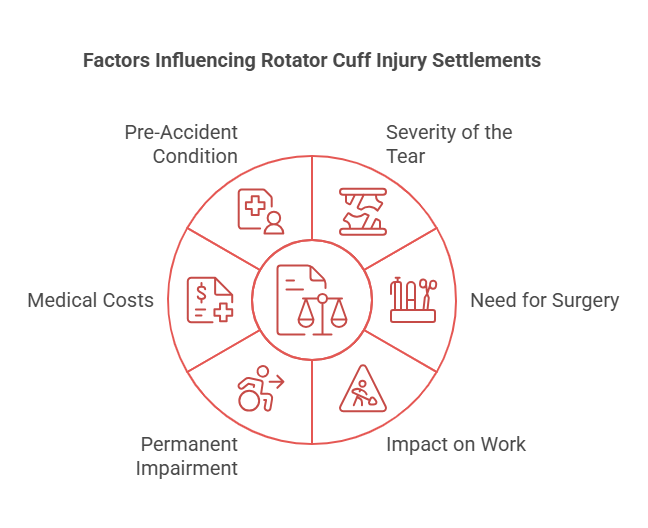
No two rotator cuff injury settlements are alike—especially when the injury stems from a car accident. The final payout depends on a number of personal, medical, and economic factors. Here’s a breakdown of what influences the compensation value:
1. Severity of the Tear (Partial vs. Full-Thickness)
A partial tear may respond well to conservative treatments like rest and physical therapy, whereas a full-thickness tear often requires surgery and extensive rehabilitation. Full tears typically involve greater pain, longer recovery, and more functional loss—directly increasing the potential settlement value.
2. Need for Rotator Cuff Surgery and Expected Recovery Timeline
The type of surgery (arthroscopic vs. open repair) and the recovery duration play a significant role. A straightforward arthroscopic procedure might lead to a few months of downtime, but open repairs or re-tears may require 6–12 months of rehab or more. The more invasive the procedure and prolonged the recovery, the higher the damages for pain, suffering, and lost income.
3. Impact on Work (Manual Labor vs. Office Jobs)
A torn rotator cuff affects people differently depending on their job type. If you’re a construction worker or mechanic, a shoulder injury could take you off the job for months—or end your career. Office workers might return sooner with limitations. The greater the impact on your earning ability, the higher the potential economic damages in your claim.
4. Permanent Impairment or Loss of Strength
If the injury leads to long-term weakness, limited range of motion, or disability—even after treatment—it raises the value of the claim. A vocational assessment or medical impairment rating can help quantify this loss, supporting compensation for reduced earning capacity and long-term pain.
5. Cost of Medical Care and Physical Therapy
Your medical expenses—current and projected—are central to your settlement. This includes diagnostics (MRI, X-rays), surgical fees, hospital stays, rehab, medications, and post-operative care. Extensive physical therapy needs can increase the claim, especially when recovery stretches over several months or more.
6. Pre-Accident Shoulder Condition
Insurance adjusters and juries often weigh your age and prior medical history. Older individuals or those with prior shoulder injuries may receive lower offers—unless it’s clearly shown the accident caused a new or significant aggravation. Demonstrating a baseline of health before the accident is key to countering this.
Rotator Cuff Tear Car Accident Settlement Examples
Understanding real-world-based fictitious case outcomes can help set expectations and clarify what influences a rotator cuff tear settlement after a car accident. Below are three fictitious examples that illustrate the range of settlements based on treatment intensity, work disruption, and medical history.
Example 1: Non-Surgical Case with Physical Therapy – $40,000
A 35-year-old office worker suffered a partial rotator cuff tear in a rear-end collision. The injury was diagnosed within two weeks, and she underwent 12 weeks of physical therapy without the need for surgery. Although she missed some work and experienced discomfort lifting her arm, she made a near-full recovery.
- No surgery required
- Limited time off work
- Mild long-term effects
Settlement: $40,000 through out-of-court negotiation, primarily covering medical expenses, therapy, and minor pain and suffering.
Example 2: Arthroscopic Surgery and Job Impact – $175,000
A 48-year-old warehouse employee sustained a full-thickness tear in a T-bone accident. Arthroscopic surgery was required, followed by six months of physical therapy. Due to ongoing strength limitations, he had to shift to a lower-paying desk role.
- Surgical repair with permanent work restrictions
- Documented loss of earning capacity
- Prolonged rehab
Settlement: $175,000 after aggressive negotiation with the insurance company. The payout included economic and non-economic damages for loss of mobility, career change, and pain.
Example 3: Re-Tear After Prior Surgery – $300,000+
A 55-year-old construction contractor with a history of rotator cuff repair reinjured the same shoulder in a high-impact side collision. Imaging confirmed a re-tear and additional tendon damage. Open surgery and extended rehab were necessary, and the injury ended his ability to continue in manual labor.
- Complex medical history
- Permanent disability from prior occupation
- Clear aggravation due to accident
Settlement: $325,000 via jury verdict after the insurer disputed causation. The plaintiff’s legal team used pre- and post-accident MRIs, orthopedic testimony, and vocational assessments to establish the aggravation and financial loss.
Verdict vs. Settlement: Which Route Pays More?
While jury verdicts may yield higher awards in cases with strong evidence and sympathetic plaintiffs, they come with greater risk and longer timelines. Out-of-court settlements are faster and less stressful, but insurers may push for lower amounts. The right legal strategy depends on the strength of your documentation, expert testimony, and your attorney’s negotiation leverage.
Car Accident Rotator Cuff Surgery Settlement Considerations
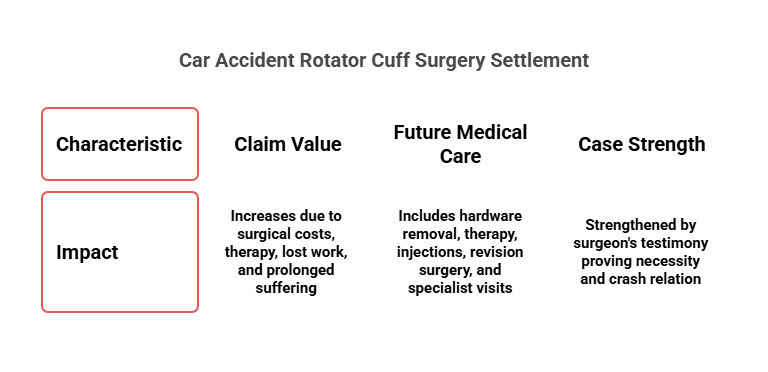 Rotator cuff surgery adds a layer of medical complexity—and legal weight—to your car accident claim. It signals a more serious injury that requires ongoing care, recovery time, and possibly permanent limitations. If surgery is on the table or already completed, here’s how it affects your settlement:
1. How Surgery Changes the Value of Your Claim
Once surgery is needed, insurance companies view the injury as more serious. Whether it’s arthroscopic repair or a full open procedure, this increases the value of your claim by adding:
- Surgical costs
- Post-op therapy
- Time away from work
- Pain and suffering over a longer period
2. Future Medical Care Must Be Accounted For
Settlement calculations often include future costs like:
- Hardware removal
- Additional physical therapy
- Injection treatments or revision surgery
- Follow-up visits with orthopedic specialists
A life care plan may be needed for chronic limitations or permanent impairment.
3. Medical Testimony Strengthens Your Case
Having your treating orthopedic surgeon or a second opinion can help prove the surgery was necessary—not optional. Their documentation and testimony show the injury was acute, crash-related, and not just the result of aging or wear-and-tear.
How to Prove Your Rotator Cuff Injury Was Caused by the Crash?
It’s not enough to be hurt—you must prove the accident caused the tear. Because rotator cuff injuries can be degenerative, insurance adjusters often challenge the link between the crash and your current condition. Here’s how to defend that connection:
1. Expect Pushback: “You Already Had It”
Common insurer defenses include:
- It’s age-related or pre-existing
- The tear was degenerative, not traumatic
- The injury isn’t consistent with a low-speed crash
2. Use MRI Results and Orthopedic Reports
A combination of MRI scans, doctor notes, and pain timelines helps prove:
- The tear was recent or worsened by trauma
- The symptoms began after the crash
- The injury was not active or disabling prior to the accident
3. Pre-Existing Doesn’t Mean Ineligible
Even if the tear existed before, you may still be compensated if:
- The accident aggravated it
- You had no symptoms before, but now you do
- You needed new treatments or surgery after the crash
This is where the Eggshell Plaintiff Rule comes in—Texas law says the at-fault driver takes you as they find you.
Dealing With IMEs and Insurance Pushback
When you file a personal injury claim for a shoulder injury, insurance companies will look for ways to limit payout. A common tactic is requesting an Independent Medical Exam (IME)—but these exams are rarely as neutral as they sound.
What Is an IME?
An IME is a medical exam arranged by the insurance company. The doctor is technically “independent” but is often selected from a panel that works closely with insurers. Their role is to:
- Reevaluate your diagnosis
- Question the severity of your injury
- Determine if the crash caused it
How Insurers Downplay Shoulder Claims
For rotator cuff tears, adjusters may argue:
- The tear is minor and doesn’t need surgery
- Physical therapy was enough
- You had similar complaints before the accident
This leads to reduced settlement offers, especially if they claim the injury wasn’t crash-related.
How to Handle IMEs
Your attorney should prepare you for the IME by:
- Reviewing medical history and how symptoms developed
- Advising what to say and what not to speculate on
- Challenging biased or inaccurate conclusions in the report
Never attend an IME without consulting your lawyer first.
Time Limits and Legal Deadlines (Texas & Beyond)
Even valid claims can be dismissed if filed too late. If your shoulder injury is crash-related, it’s crucial to act fast before the legal window closes. Here’s what you need to know:
Statute of Limitations in Texas
In Texas, the deadline for personal injury lawsuits is:
- 2 years from the date of the accident
Miss this window, and you could lose your right to compensation—no matter how strong your case.
Are There Exceptions?
Yes, but they’re rare. Exceptions might apply if:
- You were physically or mentally incapacitated
- The injury was discovered much later (delayed MRI or late onset)
- The defendant left the state for a period
Even with exceptions, courts are strict, so don’t delay legal action.
Why Early Legal Help Matters
Having a personal injury attorney early means:
- Preserving evidence before it’s lost
- Securing medical records and imaging timelines
- Filing all paperwork properly and on time
Shoulder injury claims grow more complex with every passing week. The sooner you act, the stronger your case.
Why Legal Representation Matters in Shoulder Injury Claims
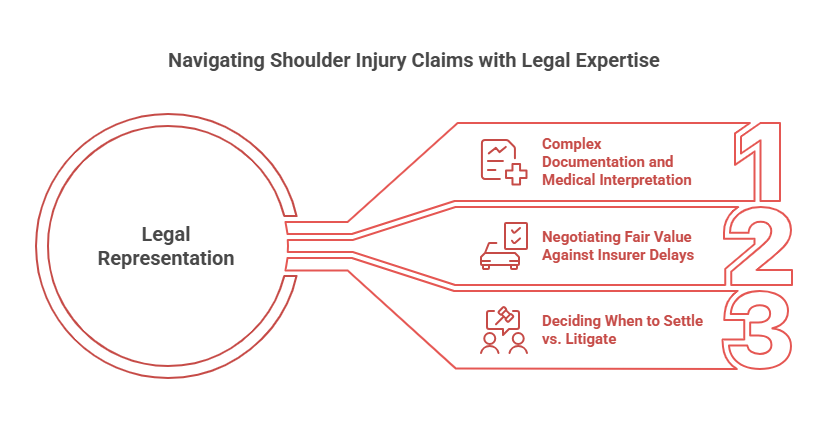 Rotator cuff injury cases—especially after a car accident—aren’t just about proving you’re hurt. They’re about proving how and why it happened, what it’s costing you now, and how it will affect your life long-term. This is where a car accident lawyer plays a pivotal role.
1. Complex Documentation and Medical Interpretation
Shoulder injuries often involve:
- Ambiguous MRIs that require expert analysis
- Overlapping symptoms with pre-existing conditions
- Treatment plans that evolve over time (e.g., failed PT, then surgery)
A lawyer helps interpret these records with your doctors to build a timeline of worsening symptoms tied directly to the crash.
2. Negotiating Fair Value Against Insurer Delays
Insurance companies often:
- Undervalue soft-tissue injuries like rotator cuff tears
- Claim symptoms are age-related or unrelated
- Offer early lowball settlements to close the case fast
Your attorney pushes back using:
- Strong medical narratives
- Precedent settlement values
- Expert testimony when needed
3. When to Settle vs. When to Litigate
Most cases settle—but not all should. An experienced attorney can help you decide when:
- The offer reflects your true damages
- Future surgery or rehab should be factored in
- Litigation may yield significantly better compensation
Legal counsel ensures you don’t walk away with less than your injury deserves.
How does Titanium Law Help With Rotator Cuff Injury Cases?
Rotator cuff injuries from car accidents can take you out of work, limit your mobility, and trigger months—sometimes years—of rehab. But when insurers call it a “wear and tear” issue or stall your claim, recovery becomes even harder. That’s where Titanium Law steps in.
We bring deep experience in shoulder injury litigation, including:
- Complex cases involving arthroscopic and open surgery
- Pre-existing tear disputes and delayed diagnoses
- Long-term impairment that affects work and daily life
Our team works closely with your doctors and orthopedic experts to build medical-backed evidence, calculate both visible and hidden losses, and present a claim that’s hard to ignore—whether at the negotiation table or in court.
If your rotator cuff injury is being downplayed, we’ll help you take it seriously. Start with a free case evaluation—no pressure, just clarity on what your claim could truly be worth.
Conclusion
Whether it’s a complete tear requiring shoulder surgery or a shoulder impingement that disrupts your daily activities, the severity of the injury plays a crucial role in your ability to secure fair financial compensation. The muscles of the rotator cuff—including the teres minor—are vital to shoulder function. When damaged in a crash, particularly from seatbelt force or impact at a stop sign or red light, the outcome often involves extended medical treatment, mounting medical bills, and a lengthy recovery process.
Don’t let the insurance company undervalue your claim or blame it on age or pre-existing wear. Whether you’re facing a reverse shoulder replacement or long-term therapy after surgical intervention, you have the right to pursue higher settlements that reflect the true cost of your severe injuries.
At Titanium Law, our law firm provides a free consultation to review your case, explain your options, and help you take the next step with confidence. Let us fight for the insurance coverage and financial compensation you deserve.
Frequently Asked Questions
How does the severity of the injury affect my rotator cuff settlement?
The more severe the injury—especially in cases involving complete tears, shoulder surgery, or a reverse shoulder replacement—the higher the potential payout. Settlements increase when medical treatment, lifestyle impact, and medical costs are well documented.
Can I claim compensation even if the tendons were already damaged before the crash?
Yes. If the accident aggravated a pre-existing condition, like wear in the tendons or prior shoulder impingement, you can still seek compensation. What matters is showing how the crash made it worse—often proven through medical evaluation and expert reports.
What if I didn’t seek medical attention right away?
Delayed medical attention can complicate your claim, but it doesn’t make it invalid. It’s important to document symptoms as soon as possible and get a proper diagnosis. Your attorney can help establish a timeline and connect your injury to the accident.
Does the location of the crash matter (e.g., red light vs. highway)?
Yes. Accidents at intersections—like red light or stop sign collisions—often help establish liability. The context also impacts how insurers view the force involved and whether the seat belt or vehicle mechanics contributed to more severe injuries.
What does a free consultation with Titanium Law include?
Our free consultation includes a full case review, discussion of your insurance policy and medical bills, and advice on how to proceed with the legal process. You’ll get clear guidance—no pressure, just answers about your rights and options.