

Not every serious injury comes from a high-speed crash. Low impact accidents—like a gentle bump in traffic or a slow-motion parking lot collision—may leave little visible damage, but they can still cause lingering physical pain and unexpected financial strain.
The challenge? These claims are often dismissed as minor by insurers, even when the victim is dealing with whiplash, nerve strain, or days of lost work. That’s why understanding how low impact car accident claims work is so important.
In this guide, we’ll walk you through what qualifies as a low impact crash, how to document your injuries clearly, and what steps to take to build a strong case for fair compensation.
What Qualifies as a Low Impact Car Accident?
Low impact car accidents typically involve collisions at or below 10 miles per hour and result in little to no visible vehicle damage. But that doesn’t mean they’re inconsequential. These are common in:
- Stop-and-go traffic
- Parking lots and driveways
- Red light and yield scenarios
- Residential areas or school zones
One common misconception is that minimal car damage equals no claim—but injury mechanics work differently. If your body absorbs the impact while your car barely crumples, you could experience far greater physical stress than you’d expect from the outside. This is especially true when:
- The vehicle was stationary at the time of impact
- The victim was elderly, had a preexisting condition, or was not braced for impact
- The collision involved a larger vehicle hitting a smaller one
These conditions often result in whiplash, back injuries, TMJ disorders, or even concussions—all of which may lack immediate symptoms but lead to long-term discomfort and financial strain.
What Factors Really Drive Settlement Outcomes in Low-Impact Car Accidents?
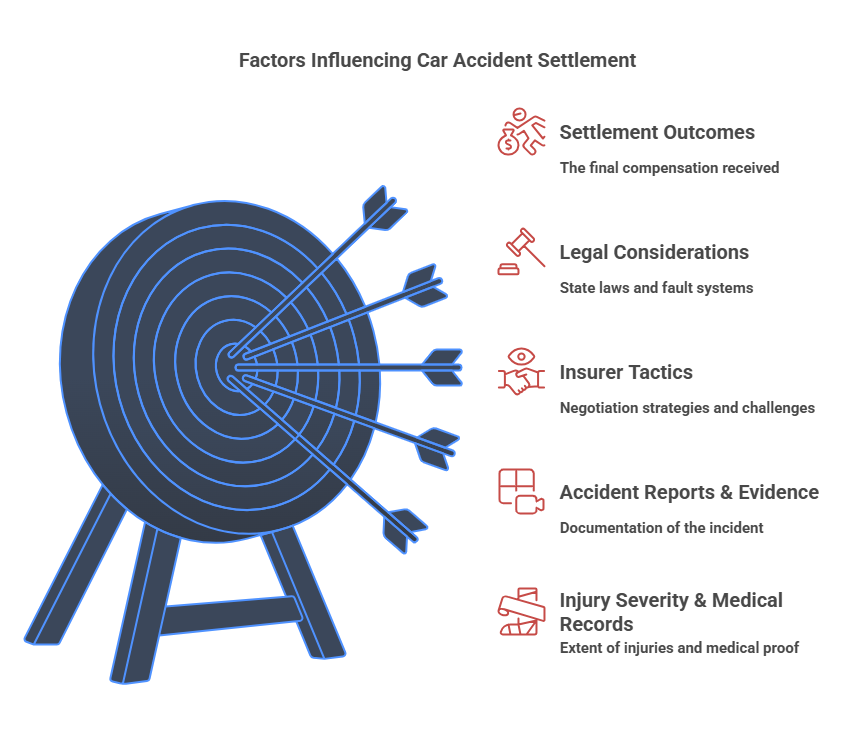
Despite the name, low impact doesn’t always mean low consequence. These cases often involve soft tissue injuries, persistent pain, and frustrating insurance hurdles—all of which can influence how (and how much) compensation is calculated. Here’s what shapes your settlement offer:
1. The Severity of Injuries Matters More Than Vehicle Damage
Whiplash, nerve strain, and muscular injuries are common in slow-speed accidents—especially when the body is unprepared for sudden movement. These injuries may not show up in X-rays or scans, but they can trigger long-term discomfort or limited mobility.
The severity of your physical condition—not just the damage to your bumper—is a core factor in what insurers are willing to pay.
2. Medical Records: The Backbone of Your Injury Claim
Insurers won’t just take your word for it—they’ll review every piece of medical documentation to evaluate:
| Purpose | What It Helps Prove |
|---|---|
| Documented Injuries | Confirmation that you sought timely care |
| Treatment Details | Severity and duration of medical treatment |
| Billing Records | The real cost of recovery (now and later) |
Keep all receipts, reports, and referrals. If your injury doesn’t look “serious” on paper, your claim is vulnerable to denial or reduction.
3. Accident Reports & Scene Evidence Carry Legal Weight
Even in low-speed accidents, reporting the incident and gathering your own evidence is key. Here’s what helps:
- Police report – Offers a neutral summary of the incident
- Photos or videos – Capture damage, road conditions, license plates, and injuries
- Witness statements – Provide third-party support for your version of events
Documentation strengthens your credibility—especially when insurers try to downplay the impact.
4. Insurer Tactics: Why You May Need to Push Back
In low impact claims, insurance adjusters often argue that “minimal impact = minimal injury.” That’s where negotiation gets tricky.
A skilled car accident attorney can push back with evidence, explain the delayed nature of soft tissue injuries, and advocate for compensation that includes:
- Current and future medical expenses
- Pain and suffering—physical and emotional
- Lost wages from time off work or reduced earning capacity
5. Legal Considerations
Low impact accident claims don’t always follow a simple path—especially when fault is unclear or laws vary by state.
If you’re found partially at fault for the accident, your final compensation may be reduced proportionally. For example:
- You’re 25% at fault
- Your total damages: $10,000
- You receive: $7,500
This makes proper evidence and legal representation critical—especially in states with strict fault thresholds.
6. How State Laws Shape Your Claim
State regulations determine everything from who pays for what to how long you have to file. Key factors include:
- Fault vs. no-fault systems (affects who files the claim)
- Statute of limitations (how long you have to take legal action)
- Uninsured/underinsured motorist coverage
- Caps on non-economic damages
Economic vs. Non-Economic Damages: What You Can Claim
Your settlement isn’t just about repairing your car. It covers both financial losses and the less visible impacts of injury.
| Damage Type | What It Covers |
|---|---|
| Economic | Medical bills, lost income, car repairs, future care |
| Non-Economic | Pain and suffering, emotional distress, reduced quality of life |
| Punitive (Rare) | Additional damages if the at-fault party acted recklessly or maliciously |
Even in low impact car accident cases, if your life has been disrupted, you deserve more than just the cost of a bumper.
How Damages Are Calculated in Low Impact Car Accidents

Even when a crash looks minor, the ripple effects—financial, physical, and emotional—can add up fast. Calculating car accident damages isn’t just about fixing a bumper. It involves evaluating medical costs, lost work time, and the harder-to-quantify toll of pain, stress, and disrupted routines.
Here’s how each type of damage is assessed in low impact claims:
1. Vehicle Repair Costs: More Than Meets the Eye
Repair costs are typically the first (and most visible) item insurers evaluate. They’ll often:
- Conduct a visual inspection or request one from a certified repair shop
- Compare multiple repair estimates for parts and labor
- Use industry software to benchmark prices
- In some cases, declare the car a total loss if repairs exceed its market value
Tip: Always get your own independent quote—it gives you leverage if the insurer’s numbers are too low.
2. Medical Expenses: What You Can—and Can’t—See
Even low-speed crashes can cause soft tissue injuries, nerve damage, or lingering back and neck pain. Insurers look at:
- Emergency care costs
- Ongoing treatment (chiropractic, physical therapy)
- Future care projections
- Prescription and assistive devices
Keep every receipt, report, and follow-up note. These not only show the cost but also legitimize the need for treatment—especially if symptoms show up days later.
3. Pain and Suffering: Valuing Invisible Impact
This category covers physical pain, emotional distress, and lifestyle disruption. Since it’s subjective, insurers often push back—unless well-documented.
Factors influencing pain and suffering calculations:
- Severity and duration of injury
- Interference with daily life or hobbies
- Emotional symptoms (anxiety, sleep disruption, PTSD)
Support your claim with:
- Medical notes that mention chronic pain or discomfort
- Mental health records or therapy sessions
- A personal impact journal describing how your life changed
4. Lost Wages and Future Earning Capacity
Time off work—whether for medical visits or rest—directly affects your finances. Here’s how compensation is typically calculated:
| Component | What It Covers |
|---|---|
| Past Lost Wages | Time missed from work due to recovery or appointments |
| Future Earnings | Anticipated income loss from ongoing limitations or disability |
| Earning Capacity | Reduced ability to work at the same level as before (physically or mentally) |
Documents that help:
- Recent pay stubs and tax returns
- Doctor’s notes restricting work activity
- Employer verification of missed work and role limitations
Average Settlement Amounts in Low Impact Car Accidents
There’s no fixed payout for a low impact accident—because no two injuries, lives, or claims are the same. But to give you a general benchmark:
- Typical settlements for minor to moderate injuries (like whiplash or soft tissue strain) often fall between $2,500 and $25,000.
- If your injuries require ongoing care, specialist visits, or significantly disrupt your work or life, the amount may rise above this range.
That said, these are only ballpark figures. What your case is truly worth depends on:
- The severity and duration of your injuries
- Medical documentation and treatment records
- Proof of lost wages or earning potential
- The quality of negotiation with insurers
- And critically, how well your pain and suffering is articulated and backed
Pro tip: Never accept a settlement based on averages. Your case value should reflect your specific medical, emotional, and financial fallout—not a statistical range.
When Should You Reject a Settlement Offer?
The first offer from an insurance company is rarely the best one—and sometimes, it’s not even fair.
You should strongly consider rejecting a settlement offer if:
- It doesn’t cover your full medical expenses (past and projected)
- It ignores pain, suffering, or emotional distress
- You haven’t finished treatment, and the long-term impact is unknown
- Your injuries have affected your job, but wage loss wasn’t factored in
- You feel rushed or pressured to sign without legal review
A fast payout might feel like closure—but it can cost you thousands if future care or income loss surfaces later.
Before signing anything, it’s wise to speak with a personal injury lawyer who can:
- Review the offer for gaps or undervaluation
- Estimate your claim based on all recoverable damages
- Negotiate a better deal—or prepare for legal action if needed
Fair compensation isn’t just about numbers—it’s about being made whole again, physically, emotionally, and financially.
How Long Does It Typically Take to Settle a Low Impact Car Accident Claim?
The timeline for resolving a low-impact car accident settlement can range from a few months to over a year, depending on several variables:
- Severity of injuries and length of treatment
- Clarity of fault and accident documentation
- Responsiveness of insurance companies
- Whether legal representation is involved
Straightforward claims with clear liability and well-documented injuries often resolve within 3–6 months. However, if injuries are disputed or long-term effects are still unfolding, expect a longer negotiation window—especially if you’re undergoing physical therapy or consulting specialists.
Rushing to settle early can backfire. Many soft tissue injuries take time to fully manifest. Settling too soon may leave you with uncovered medical costs later.
Your attorney will help time the settlement appropriately—not too early to miss out, not too late to stall recovery.
How Insurance Companies Undervalue Low Impact Claims
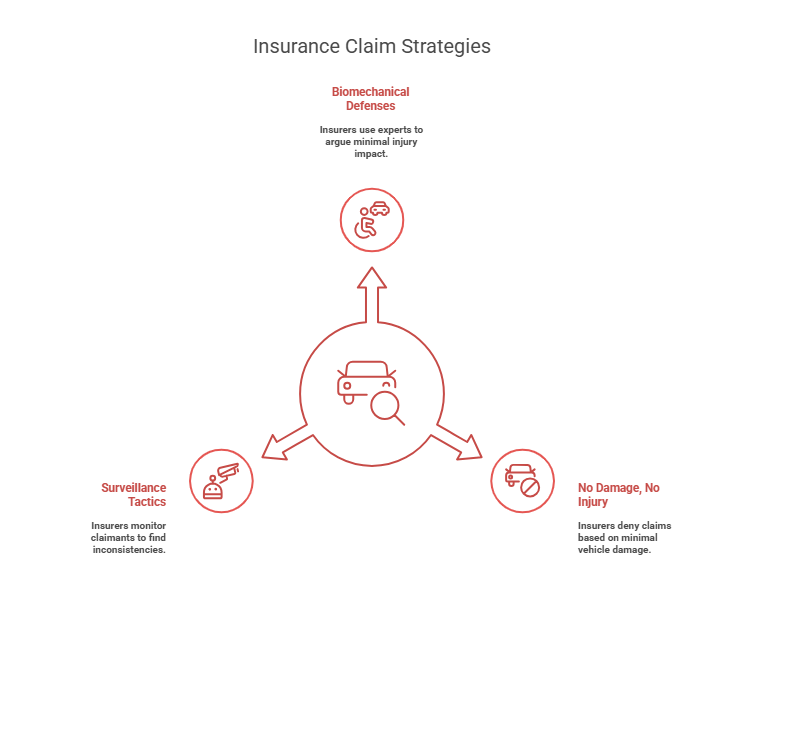
Insurance adjusters are trained to question the validity of injury claims that stem from low-speed accidents. Here are three common strategies they use to downplay or deny your compensation:
1. Biomechanical Defenses
Insurers may hire biomechanical experts to argue that the forces involved in your accident were too minimal to cause injury—especially if there’s little visible damage to the vehicles.
Why it matters: These arguments often ignore real-world medical outcomes and can unfairly discredit legitimate soft tissue injuries like whiplash.
2. “No Damage, No Injury” Claims
They may argue that because the vehicle shows little damage, your body couldn’t have been harmed either. This tactic relies on flawed assumptions and ignores how even minor collisions can jolt the neck or spine.
Don’t fall for it: Medical evidence—not bumper condition—should determine injury claims.
3. Surveillance Tactics
In some cases, insurers may conduct surveillance to catch you doing something that appears inconsistent with your injury claim (e.g., carrying groceries, walking the dog).
Tip: Always follow medical advice and avoid activities that contradict your documented limitations while your case is ongoing.
Challenges Victims Face in Low Impact Claims
Low impact car accidents can be deceptively complex.
Victims often face skepticism—not just from insurance adjusters, but sometimes from medical providers and even legal professionals. The physical injuries might not show up clearly on imaging scans, and the lack of vehicle damage is often used to downplay the severity of the incident.
Key challenges include:
- Disproving the “no damage, no injury” assumption
- Getting insurers to recognize delayed-onset symptoms
- Documenting soft tissue and psychological trauma
- Avoiding lowball settlements based on visible damage alone
For many, the toughest part isn’t the accident—it’s the battle that follows.
Why Legal Representation Matters in Low Impact Cases
Insurance companies are skilled at minimizing claims that look minor on paper. A strong legal advocate flips that script—bringing clarity, structure, and strategy to your case.
An experienced personal injury lawyer helps by:
- Establishing injury credibility through medical narratives and expert testimony
- Handling insurer negotiations to reflect both current and future losses
- Preventing documentation gaps that could harm your claim
- Accurately valuing pain and suffering, even when it’s harder to quantify
Low impact doesn’t mean low stakes. With the right representation, your case gets the attention—and compensation—it deserves.
When to Hire a Personal Injury Lawyer
You should seriously consider hiring a lawyer if:
- Your injuries required ongoing or specialized medical care
- You’re dealing with whiplash, nerve pain, or soft tissue issues
- You’re missing work or anticipating future earnings loss
- The insurer has questioned or delayed your claim
Even in minor-looking cases, a lawyer ensures nothing gets missed or undervalued—especially emotional and long-term financial impacts.
Here’s how they strengthen your case:
- They dig deeper into your losses, including mental anguish, lifestyle changes, and future care needs
- They challenge insurer tactics head-on, including biomechanical defenses and soft tissue skepticism
- They know the real value of your claim, beyond what’s initially offered
Ultimately, legal support means your case is built for negotiation, not dismissal—and your settlement reflects the true weight of your experience.
Where Insurance Stops, Titanium Law Steps In
Low impact car accident settlement victims often feel like they’re stuck in limbo: not injured “enough” to be taken seriously, but hurting enough to feel it every day—physically, emotionally, and financially.
We’ve seen how quickly insurers close the door on these claims, and how easily valid injuries are brushed aside if they’re not aggressively documented and defended.
That’s where we step in.
At Titanium Law, we focus exclusively on Texas personal injury and auto accident claims—including the ones insurance companies try hardest to undercut. Here’s how we help:
- We validate your injury story: We work with doctors, specialists, and experts to establish a credible, detailed timeline of your physical and emotional impact—even if symptoms took time to appear.
- We anticipate insurer tactics: Whether they’re using biomechanics defences or questioning damage photos, we’ve countered these arguments before—and we don’t let them define your outcome.
- We pursue full compensation, not fast closure: We take time to assess the true value of your claim, from immediate bills to long-term income disruption and emotional toll.
No overpromises. No shortcuts. Just smart, experienced advocacy—backed by results.
If you’ve been in a low impact car accident settlement situation and feel like no one’s listening, we’re here to change that.
Book a free, confidential consultation with Titanium Law today. Let’s make sure your claim tells the whole story—and gets the settlement it deserves.
Conclusion
If you’ve been involved in low impact car accident settlement case, don’t underestimate its long-term consequences. Prioritize prompt medical care, maintain detailed records, and seek legal guidance early. Every case is different, and your settlement should reflect not just what was damaged, but what was truly disrupted—physically, financially, and emotionally.
By understanding your rights and working with professionals who know how to protect them, you’ll be better equipped to pursue the compensation you deserve—and avoid settling for less than what your low impact car accident settlementis truly worth.
Frequently Asked Questions
1. How does the severity of your injuries influence the outcome of car accident cases, especially after minor accidents?
Even in low-speed collisions, the extent of your injuries can play a significant role in determining the value of your claim. Injuries like traumatic brain injuries, whiplash, or chronic pain may not be visible but can result in loss of enjoyment of life and long-term consequences. An experienced car accident lawyer will know how to present enough evidence to ensure these injuries are fully accounted for during settlement negotiations.
2. What is the difference between property damage compensation and personal injury damages in a motor vehicle accident?
Property damage covers the repair or replacement of your vehicle, while personal injury damages include costs for future medical care, lost wages, pain and suffering, and—when applicable—punitive damages. In low impact car accident settlement cases involving serious injury or wrongful death, the personal injury portion can involve a lot of money and hinges on various factors, including insurance coverage limits and documented emotional trauma.
3. Can I still receive a fair settlement if the low impact car accident settlement caused emotional but not physical injuries?
Yes, emotional trauma can be compensable in personal injury cases, particularly if it affects your ability to work or results in a diagnosable condition like PTSD. However, proving emotional harm requires enough evidence, such as therapist records or expert testimony. A skilled car accident lawyer plays a pivotal role in establishing the full impact of the trauma and negotiating a fair settlement.
4. How does an experienced car accident lawyer help with estimating future medical costs?
Calculating future medical care is one of the most complex aspects of low impact car accident settlement. An experienced car accident lawyer works with medical professionals to forecast treatment needs and costs, ensuring your settlement accounts for ongoing therapies, surgeries, or assistive care. This becomes essential in both minor accidents with long-term effects and severe injury claims, where overlooking future needs could cost you a lot of money.
5. Is a free consultation or free case evaluation with a lawyer worth it for a car crash that seems minor?
Absolutely. Even if you think the accident was low impact car accident settlement, there may be hidden injuries or gaps in insurance coverage that affect your claim. A free consultation allows a car accident lawyer to assess the number of factors involved—such as the other driver’s liability, your property damage, and potential for punitive damages—before you commit to any legal action. Many car accident victims don’t realize the value of their claim until they get professional input.