

You finally reached a car accident settlement—but now you’re wondering if the IRS wants a piece of it. The lump sum looks like relief, but will it trigger unexpected taxes? Are you responsible for reporting it? And if so, which parts?
The truth is: not all settlement money is treated the same.
Medical bills? Usually tax-free. Lost wages? Possibly taxable. Emotional distress? It depends. Without understanding how each part of your payout is classified, you could be caught off guard come tax season—or worse, underreport and face penalties.
In this guide, we break down which parts of a car accident settlement are taxable, which are not, and how to protect yourself with smart documentation and legal clarity.
Are Car Accident Settlements Considered Taxable Income?
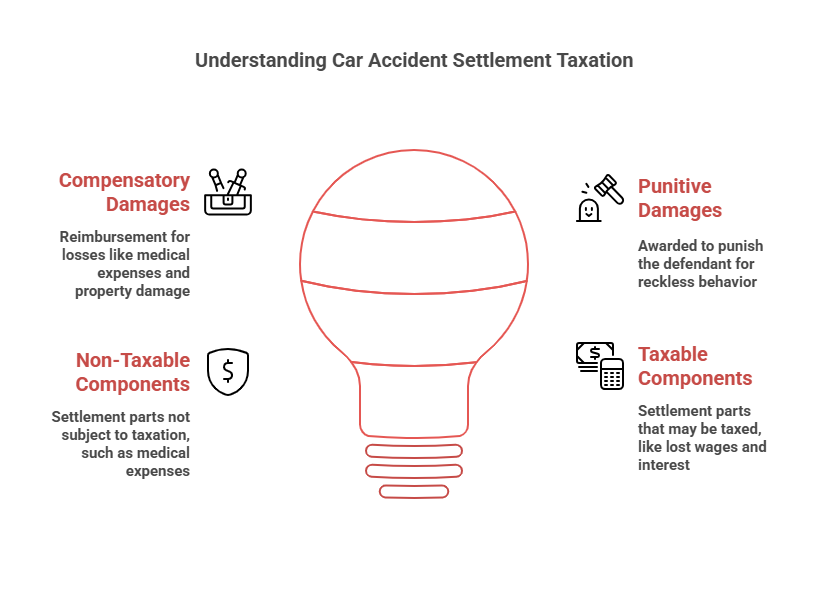 Whether your car accident settlement is taxable depends largely on what the money is intended to cover. Under federal law, the IRS breaks down settlements into two broad categories: compensatory and punitive damages.
IRS Classification: Compensatory vs. Punitive Damages
- Compensatory damages are meant to reimburse you for losses—such as medical expenses, property damage, and pain and suffering due to physical injuries.
- Punitive damages, on the other hand, are awarded to punish the defendant for especially reckless or malicious behavior, and these are considered taxable.
What the IRS Typically Considers Non-Taxable
The following settlement components are generally not taxed by the IRS:
- Reimbursement for medical expenses (past and future)
- Compensation for physical injuries or physical sickness
- Payment for emotional distress directly tied to a physical injury
- Compensation for property damage (as long as it doesn’t exceed the adjusted basis of your vehicle)
This means that if your settlement strictly covers your physical injuries, medical bills, and car repair, it likely won’t add to your tax bill.
When a Settlement Becomes Taxable
There are, however, gray areas that can trigger tax liability, such as:
- Lost wages: If your settlement includes compensation for missed work, the IRS may treat it like regular income.
- Emotional distress without a related physical injury: This may be considered taxable.
- Interest on the settlement: If the payout includes interest for delayed payment, that portion is often taxed.
What Parts of a Settlement Are Not Taxable?
If your car accident settlement is compensating you for actual physical harm or related losses, it’s typically exempt from federal income tax. The IRS recognizes that these payments are meant to restore, not enrich.
Generally Non-Taxable Components Include:
- Compensation for physical injuries or illness
If your payout is for broken bones, whiplash, or other bodily harm, it is not considered taxable income. - Reimbursement for medical treatment
Costs like ER visits, surgeries, medications, and physical therapy are usually tax-exempt if not previously deducted on your taxes. - Hospital bills already paid
As long as you didn’t claim these expenses as deductions on a prior return, they remain non-taxable when reimbursed. - Property damage reimbursements
Repairs or replacement costs for your car or personal items are tax-free up to the item’s adjusted basis. - Emotional distress tied to physical injury
If the trauma stems from your injury (e.g., anxiety from chronic pain or a long recovery), it typically falls under non-taxable compensatory damages.
Example:
You were rear-ended at a stop sign, suffered whiplash, required 6 weeks of therapy, and your car sustained $5,000 in damage. Your $25,000 settlement covered physical treatment and car repairs. None of it is taxable.
What Parts of a Settlement Are Taxable?
Certain elements of your settlement may attract the IRS’s attention—especially those considered unrelated to physical injury or those that resemble regular income.
Taxable Settlement Components Include:
- Punitive damages
These are awarded to punish the at-fault party for egregious behavior and are always taxable, even in injury cases. - Interest on the settlement
If your settlement accrues interest between the verdict and the payout, that interest is taxed like any other earned income. - Emotional distress unrelated to physical injury
Claims for mental anguish from the stress of litigation or the crash itself, without a related physical injury, are typically taxable. - Lost wages
If part of your claim includes missed paychecks, the IRS may treat it like regular earned income, subject to income and employment tax.
Example:
Your $50,000 settlement includes $2,500 in interest due to payment delays and $10,000 for emotional distress (not tied to injury). That $12,500 is taxable, while the rest may be exempt if related to physical harm.
Also Read- Can You Go to Jail For a Car Accident in Texas?
How Does the IRS Determine What’s Taxable?
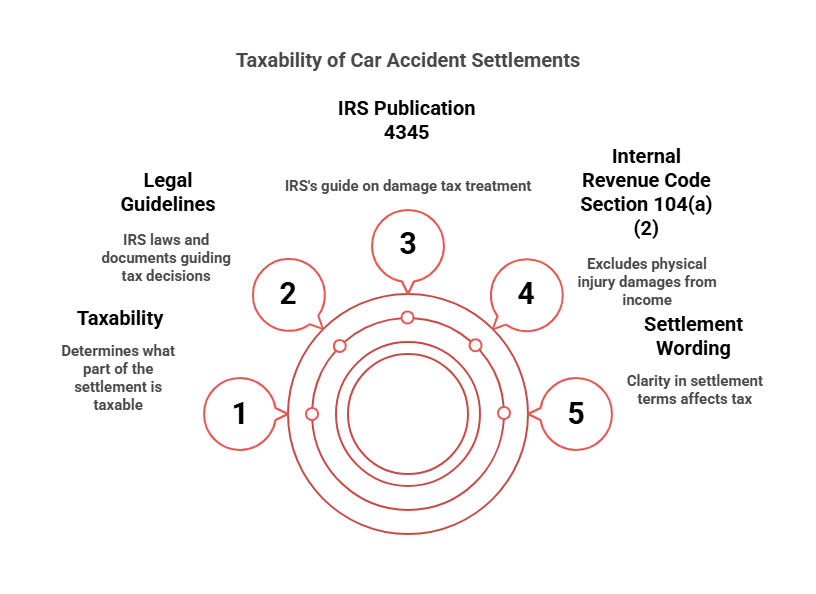
The taxability of a car accident settlement doesn’t come down to the amount—it depends on what the payment represents. The IRS relies on specific laws and documentation to determine what’s taxable and what isn’t.
Key Legal Guidelines:
- IRS Publication 4345: This document outlines how different damages—from physical injury to lost wages—are treated under federal tax law. It’s the IRS’s own playbook for evaluating settlements.
- Internal Revenue Code Section 104(a)(2): This section specifically excludes from gross income any damages received for physical personal injuries or physical sickness—as long as there’s no deduction previously taken for the medical costs.
What the IRS Looks For:
- Settlement wording
The IRS leans heavily on how the settlement is categorized. If emotional distress, lost wages, or punitive damages are not clearly broken out, the entire amount may risk partial taxation. - Specificity in the agreement
A well-drafted settlement agreement helps shield you from unnecessary tax exposure. Your attorney should clearly allocate amounts to physical injury, medical expenses, and other compensable categories.
Also Read- What To Do After a Car Accident in Katy, TX That’s Not Your Fault
Tax Implications of Lost Wages in a Settlement
Lost wages are one of the most misunderstood and frequently challenged parts of car accident settlements when it comes to taxes. Here’s what you need to know:
Are Lost Wages Taxable?
Yes. If part of your payout replaces income you would’ve earned at work, it’s considered ordinary income by the IRS and is therefore taxable—just like your paycheck.
Future Lost Income & Earning Capacity
These are gray areas. While future lost wages are also generally taxable, damages awarded for a reduced ability to earn (e.g., due to permanent disability) may be partially exempt, depending on how they are framed in the settlement.
Other Payroll Tax Issues:
- 1099 vs. W-2: Depending on how the payer classifies the wage-related portion, you might receive a 1099-MISC or have to treat it as W-2 income. Your attorney or tax advisor can help clarify this.
- Employer-side taxes: Unlike normal wages, your settlement’s lost income portion typically doesn’t include employer contributions like Social Security or Medicare.
Verdict vs. Insurance Payout:
If lost wages are awarded in a lawsuit verdict, the court usually itemizes them—making them easier to track for taxes. In contrast, insurance settlements can blur the lines if not broken down properly, leading to potential IRS scrutiny.
Also Read- How Long Do You Have to Report a Car Accident in Katy to Your Insurance Company? Here’s the Truth.
Structured Settlements vs. Lump-Sum Payments

The way you receive your car accident settlement can influence how much tax you may owe. Whether you opt for a structured settlement (paid over time) or a lump-sum payout, each has tax-related pros and cons.
Structured Settlements: Pros and Cons
- Pro: Offers predictable, tax-efficient income over years—ideal for long-term care or income replacement.
- Con: Less flexible—once terms are set, you can’t renegotiate for emergencies.
How Structured Settlements Are Taxed
- For physical injury settlements, periodic payments remain non-taxable as long as they’re compensatory in nature.
- Payments from taxable portions (like lost wages or punitive damages) are taxed as received, spreading liability across years.
Lump-Sum Settlements: Fast but Riskier
- If your settlement includes taxable components, a lump sum may trigger a higher tax bill in the year it’s received.
- Lump-sum payouts offer flexibility—but can complicate tax planning if not carefully allocated.
How State Taxes Might Apply
While federal tax laws set the baseline, state income tax rules can vary. Depending on where you live—or where the accident occurred—your settlement may be subject to additional state-level taxation.
State Tax Examples:
- Texas – No state income tax, so your car accident settlement is not taxed at the state level.
- California – State taxes may apply to certain components, such as punitive damages or interest earned.
When to Get Help:
- If your accident or residence spans multiple states, consult a CPA or tax attorney who can help assess your total liability.
- Settlements involving lost wages or business disruption might trigger state-specific withholding.
Protecting Your Payout: Legal and Tax Tips
Avoid leaving money on the table due to poor settlement structuring or lack of legal strategy. The right planning can shield your payout from unnecessary taxes.
Tips to Minimize Tax Burden:
- Precise Settlement Language: Your attorney should ensure the agreement clearly separates taxable and non-taxable components.
- Request a Tax Allocation Letter: This document helps justify the tax-free nature of physical injury damages if the IRS ever audits your return.
- CPA + Legal Coordination: Work with a lawyer and tax professional to review how your settlement aligns with your total financial picture.
Example:
A Texas client received a $240,000 car accident settlement. By strategically classifying $190,000 for physical injuries and medical costs—and documenting it through medical records and a tax allocation letter—she avoided nearly $8,000 in unnecessary federal taxes.
Why Work With Titanium Law on Your Car Accident Settlement?
Car crash settlements involving multiple components—medical costs, lost wages, emotional distress—require more than legal negotiation. They require clarity. At Titanium Law, we:
- Ensure your settlement agreement separates taxable and non-taxable portions (crucial for IRS and CPA alignment)
- Collaborate with financial experts to minimize your tax burden, especially for high-value settlements
- Push back when insurers bundle everything into a lump sum that could cost you more in taxes
We Know the IRS Language—And the Insurer Tactics
From Section 104(a)(2) to IME tactics and vague policy language, we know how settlements can be undercut without clients even realizing it. That’s why we:
- Prepare clean documentation and tax allocation letters as part of your claim package
- Build in provisions for structured settlements, annuity planning, or delayed payouts if it helps you keep more of what you’re owed
Book your free consultation today—and protect what you’ve already fought hard to earn.
Conclusion
For many car accident victims, the settlement check feels like the final chapter—but the tax consequences can come back later if you’re not careful. While most personal physical injuries are not taxable under IRS regulations, certain types of compensation like emotional distress, interest, or lost wages might be.
Understanding the taxability of your settlement isn’t just good practice—it’s essential. Whether you’re recovering from a motor vehicle accident in Las Vegas, North Las Vegas, or anywhere in the U.S., working with a personal injury lawyer and tax advisor can help protect the portion of your settlement that truly belongs to you.
Before you cash that car accident insurance settlement, make sure the parts of your settlement are properly classified, so the Internal Revenue Service doesn’t take more than its fair share.
Frequently Asked Questions
Is my car accident settlement taxable?
Generally, no—compensation for personal physical injuries and related medical care is not taxable. However, portions of your settlement like interest or punitive damages may be taxable depending on how your case is structured. Consult a car accident lawyer or tax professional to ensure clarity.
What if my settlement includes lost wages?
If your personal injury settlement includes payment for lost income, that amount is typically treated like regular income and may be taxed. Consult a car accident lawyer or tax professional to ensure clarity.
Do I need to report my auto accident settlement on my tax return?
Only taxable portions—like interest or punitive damages—must be reported. You may receive a tax form (like a 1099) depending on your settlement structure. Your attorney should advise you on what to report.
How does the IRS determine the taxability of a settlement?
The Internal Revenue Service uses the details of your settlement agreement to determine taxability. The classification must reflect whether the compensation was for an account of personal physical injuries, lost wages, or something else.
Can a personal injury lawyer help reduce my tax burden?
Yes. An experienced auto accident attorney can work with a CPA to properly structure your auto accident settlement. This ensures IRS compliance and helps keep more of your compensation in your hands.