

You already had the back pain. Or the old knee injury. Or the healed fracture from years ago. Then came the car accident—and suddenly, everything flared up again. The pain’s worse, your mobility is shot, and you’re being told it’s “just a pre-existing condition.”
Sound familiar?
Here’s the truth: if a car crash aggravates a pre-existing condition, you’re not out of options—you may still be entitled to a fair settlement. But don’t expect the insurance company to make it easy. They’ll look for every excuse to downplay your claim, even if you know exactly how much worse things got after the accident.
This blog unpacks everything you need to know about car accident aggravated pre-existing condition settlements—from how these cases work to what it takes to prove your injury got worse because of the crash. Whether you’re managing chronic pain or reliving an old injury in a new way, here’s how to protect your rights and push for the compensation you actually deserve.
What Is an Aggravated Injury in a Car Accident?
When a car accident worsens an existing health issue—like a sore back, a prior back injury, a past surgery site, or an old sports injury—it’s known as an aggravation of a pre-existing condition. This doesn’t mean the condition simply flared up. It means the accident made the injury worse, more painful, or more limiting, often requiring new treatment, medications, or therapies that weren’t previously necessary.
From a legal standpoint, Texas personal injury law protects accident victims even when they had health issues before the crash. Thanks to the “eggshell plaintiff” rule, at-fault drivers are fully liable for the full extent of your injuries and the harm they cause—even if the injured person was more vulnerable due to a prior condition. In other words, you don’t lose your right to fair compensation just because you weren’t in perfect health before the accident.
Common Pre-Existing Conditions Aggravated by Car Accidents
Certain conditions are especially susceptible to aggravation in low- or high-impact motor vehicle accidents. These include:
- Back injuries: Herniated discs, sciatica, or chronic lower back pain can worsen significantly after a crash.
- Neck and spine issues: Prior whiplash or cervical spine problems may become newly symptomatic or more severe.
- Shoulder injuries: Old rotator cuff tears or dislocations may flare up or tear further.
- Knee injuries: Past surgeries or degenerative joint conditions can become unstable again after impact.
- Hernias: Abdominal trauma can worsen an existing hernia, causing further complications.
- Traumatic brain injuries (TBIs): A previous mild TBI may be exacerbated into more serious cognitive or neurological issues.
What the Eggshell Plaintiff Rule Means for Your Claim
Texas law recognizes that not every car accident victim starts from perfect health. The Eggshell Plaintiff Rule ensures that you can still recover damages even if you had a pre-existing condition. Under this principle, a negligent driver is fully responsible for all injuries caused—even if the injuries are more severe because of your pre-accident health.
What matters most is proving that the accident made your condition worse, not that you were already dealing with pain or limited mobility.
Aggravated vs. Exacerbated Injuries: Why the Distinction Shapes Your Claim
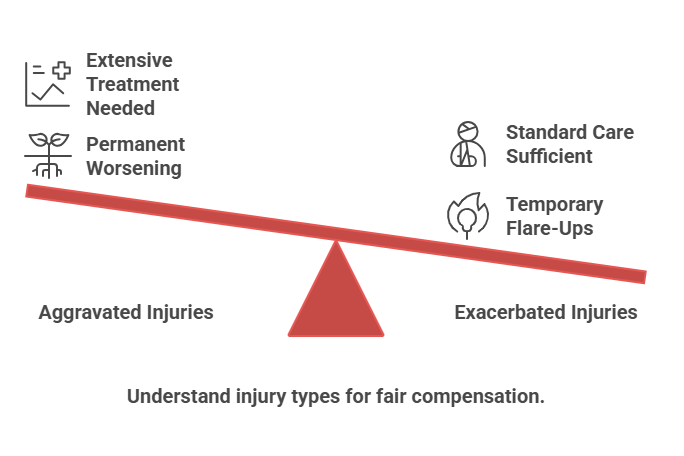
Not all post-accident injuries are the same—even if they stem from an existing condition. In personal injury law, two terms carry major weight: aggravation and exacerbation. Understanding the difference is key to how your case is argued, evaluated, and ultimately compensated.
- Aggravated injuries refer to a lasting or permanent worsening of a pre-existing condition caused by the accident. These typically require new treatment plans, surgeries, or long-term therapy and may reduce quality of life.
- Exacerbated injuries are temporary flare-ups—intense and painful, yes, but they resolve over time with standard care or medication adjustments.
This difference matters when insurers claim, “you were already injured.” What they’re really doing is trying to avoid paying for the added harm caused by the crash. The right documentation can counter this argument—and protect your compensation.
Case Comparisons: What Aggravated vs. Exacerbated Looks Like
| Case Type | Pre-Accident Condition | Post-Accident Impact | Injury Classification |
|---|---|---|---|
| Shoulder Injury | Healed post-rotator cuff surgery | Re-tear confirmed by MRI; new surgery + 6 months PT required | Aggravated |
| Chronic Neck Pain | Stable with medication | Flared up; resolved after 4 weeks of therapy | Exacerbated |
| Lower Back Disc Issue | Occasional stiffness, no treatment | Herniation diagnosed; daily pain + missed work | Aggravated |
| Arthritis (Knee) | Mild discomfort, managed with OTCs | Temporary inflammation after crash, subsided in 3 weeks | Exacerbated |
In both scenarios, the crash triggered real consequences, but aggravated cases carry longer recovery timelines and higher damages, often involving future medical care, job impact, and lifestyle limitations.
Legal Considerations for Pre-Existing Injury Claims
If a car crash aggravates your condition, it’s not about hiding your history—it’s about proving how the accident changed the trajectory of your health. Here’s what strengthens your claim:
- Causation: Use imaging, physician notes, and treatment timelines to show that the crash directly worsened your condition—not just coincidentally.
- Differentiate new injuries: If you developed both a new injury and worsened an old one, split them clearly in your records and claim.
- Track progression: Progress notes, follow-up scans, and therapy reports can build a timeline of worsening symptoms that insurers can’t easily dismiss.
- Eggshell Plaintiff Rule: In Texas, and many other states, the law protects vulnerable individuals. If you were more susceptible to injury, that doesn’t excuse the defendant from full liability.
- Statute of Limitations: In Texas, you typically have 2 years to file. Don’t delay—even minor setbacks can derail a valid aggravated injury case if filed too late.
Also Read- Can You Go to Jail For a Car Accident in Katy, Texas?
What To Do If a Car Crash Aggravates Your Condition?
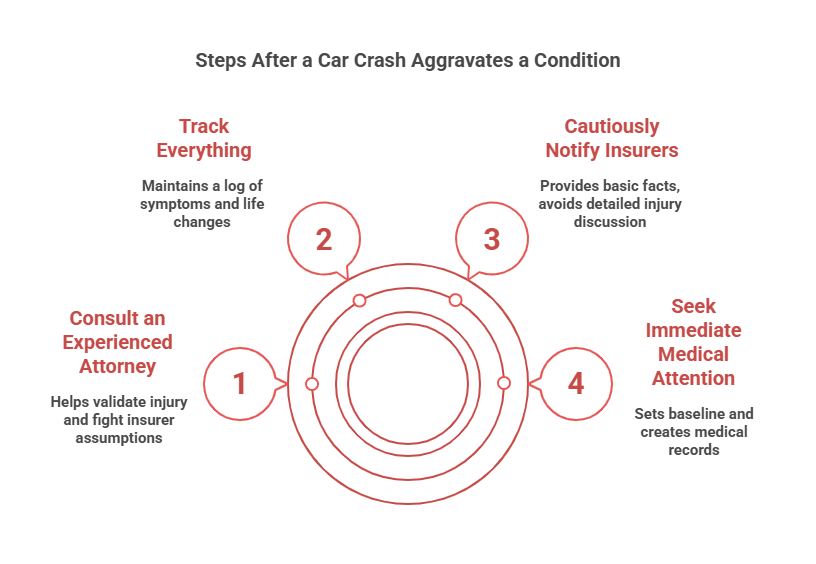
When you’re already managing a condition, a crash can feel like a step backward—but you don’t have to handle it alone. Here’s what to do next:
- Seek Immediate Medical Attention
Clearly explain your pre-existing condition and new symptoms. This sets a baseline and creates credible medical records from day one. - Cautiously Notify Insurers
Give only the basic facts. Wait to discuss injuries until you’ve spoken to a lawyer—especially if you’ve had prior claims or conditions. - Track Everything
Maintain a daily log of pain levels, mobility issues, medical visits, and life changes. This not only supports your claim—it reveals patterns insurers often overlook. - Consult an Experienced Attorney Early
Aggravated injury claims can become battlegrounds for denial. A personal injury lawyer can help validate your injury progression, work with medical experts, and fight insurer assumptions with evidence—not emotion.
Watch Out for IME Requests from Insurers
After filing a personal injury claim, the insurance company may ask you to undergo an Independent Medical Exam (IME)—but don’t let the name fool you. These evaluations are often conducted by doctors hired by the insurer, not your personal physician.
Their job? Often, to minimize the severity of your injuries or suggest that your pain is unrelated to the accident.
Why it matters:
An unfavorable IME report can be used to deny or reduce your compensation. If you’re asked to attend one, speak with your attorney first. They can help you prepare, ensure the process is fair, and challenge any biased or inaccurate findings that could harm your case.
Is There a Deadline for Filing a Personal Injury Claim Involving a Pre-Existing Condition?
Yes—Texas law sets a strict two-year statute of limitations for most personal injury claims, including those involving aggravated or exacerbated pre-existing conditions. This means you have two years from the date of the accident to file your lawsuit, or you risk permanently losing the right to seek compensation.
For victims managing chronic injuries, this timeline can feel deceptively long. But in reality, delays in filing can cost you access to vital evidence, weaken your case, and make it harder to prove how the accident impacted your condition.
Are There Any Exceptions?
There are limited exceptions to this deadline, such as:
- If the injured person was mentally or physically incapacitated at the time of the accident.
- If the defendant leaves the state for an extended period.
- If the injury was not immediately discoverable (known as the “discovery rule”), though this is rarely granted in car accident cases involving pre-existing conditions.
Even if an exception may apply, courts scrutinize delays closely. That’s why acting early—well before the statute expires—is crucial.
What’s the Average Settlement for an Aggravated Pre-Existing Condition?
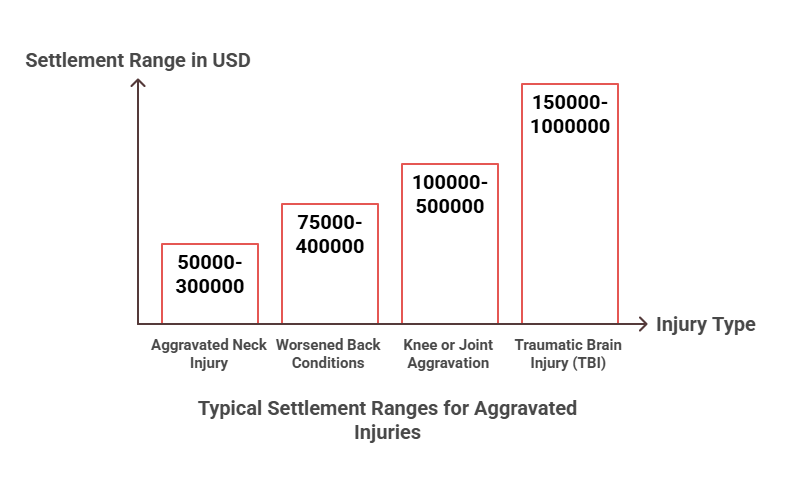 Settlement amounts for aggravated pre-existing injuries vary widely, but they often reflect greater complexity, higher medical costs, and longer recovery timelines than new-injury claims. Payouts depend heavily on:
- Severity of Aggravation: If the accident transformed a manageable condition into a debilitating one—such as triggering the need for surgery, injections, or long-term therapy—the compensation will increase accordingly.
- Impact on Daily Function: If you can no longer work, lift your child, or even sit comfortably for extended periods, these losses count—both financially and emotionally. Claims often factor in loss of enjoyment of life, a non-economic damage that’s harder to quantify but highly impactful.
- Long-Term Outlook: Permanent impairment, recurring flare-ups, or lifelong medical needs (like mobility aids or pain management) can dramatically raise the settlement value.
Realistic Settlement Ranges (By Injury Type)
Here’s a look at rough figures based on recent aggravated injury claims:
| Injury Type | Typical Settlement Range |
|---|---|
| Aggravated Neck Injury | $50,000 – $300,000 |
| Worsened Back Conditions | $75,000 – $400,000 |
| Knee or Joint Aggravation | $100,000 – $500,000+ |
| Traumatic Brain Injury (TBI) | $150,000 – $1,000,000+ |
These ranges are ballpark estimates and vary based on jurisdiction, documentation strength, and legal strategy. Claims supported by clear before-and-after medical records, strong expert testimony, and effective negotiation often result in higher compensation.
Why Legal Representation Makes a Measurable Difference
Pre-existing condition claims are among the most frequently contested in personal injury law. Insurance companies often argue:
- “You were already hurt before the accident.”
- “The new pain is part of the old condition.”
- “You would have worsened anyway.”
An experienced car accident attorney helps shift the focus back to what matters: what changed after the accident—and who caused it.
Here’s what skilled legal representation brings to the table:
- Legal Framing: Leveraging doctrines like the Eggshell Plaintiff rule to hold the at-fault party fully accountable.
- Medical Strategy: Coordinating with doctors to create clear comparisons of your health before and after the crash.
- Negotiation Power: Pushing back against lowball offers, misclassification of injuries, or unfair delays.
- Trial Readiness: If needed, your attorney can take your case to court—backed by expert witnesses and a strong paper trail—to secure the outcome you deserve.
How to Choose the Right Law Firm for Complex Injury Cases?
Not all personal injury firms are equipped to tackle the complexities of aggravated condition claims. These cases go beyond simply documenting pain—they require proving how an accident turned a stable condition into a daily struggle and securing compensation that truly reflects the full impact.
At Titanium Law, we focus on personal injury cases where the details matter. That includes working with:
- Complex medical histories
- Disputed causation
- Invisible injuries that insurers try to minimize
Our legal team knows how to build medically supported narratives that insurers can’t dismiss—and juries understand. We’ve helped clients across Texas turn undervalued claims into full, dignified compensation packages.
If you’re unsure whether your case qualifies or if your injury is being used against you, we’ll help you find clarity—no pressure, just answers.
Book a free consultation and get an honest assessment of your aggravated injury case.
Conclusion
A car accident that aggravates a pre-existing condition can feel like being punished twice—first for the crash, then for your medical history. But the law doesn’t see it that way. You still have the right to pursue compensation for how the accident made things worse, not just what existed before.
The key is showing that change—how your daily life, medical needs, or long-term outlook shifted after the crash. With the right legal guidance, strong documentation, and a clear understanding of how Texas law protects you, your aggravated condition doesn’t have to be a legal disadvantage.
At the end of the day, your health story matters. And so does your recovery.
Frequently Asked Questions
What legal rights do I have if an accident worsens a pre-existing condition?
Under the ‘Eggshell Plaintiff’ rule, you are entitled to seek compensation for the worsening of a pre-existing condition caused by an accident. You have the right to recover damages for any additional pain or suffering and medical expenses you face due to the aggravation.
How can I prove my condition was aggravated by the accident?
You can prove that your condition was aggravated by acquiring medical records that document your condition before and after the accident. Additional evidence can include expert testimony about how the accident contributed to the worsening of your injury.
What should I avoid doing when filing an aggravated condition claim?
Avoid downplaying symptoms, skipping medical treatment, hiding pre-existing conditions, and rushing into settlements. Additionally, it is not in your best interest to steer clear from providing a recorded statement or complete medical history to the insurance company without consulting a personal injury attorney.
How is settlement value calculated in these cases?
Settlement values in aggravated pre-existing injury cases take into account factors such as the severity of aggravation, impact on daily life, loss of quality of life, and long-term prognosis. It involves calculating medical expenses, lost wages, pain and suffering, and loss of enjoyment of life caused by the accident.
Why is it crucial to disclose all pre-existing conditions to your lawyer?
Disclosing all pre-existing conditions to your good lawyer helps ensure they can build the strongest case. With full knowledge of your medical history, they can strategically present your claim, anticipating possible defense arguments and preemptively countering efforts to undermine your claim’s validity.
Can insurance companies reject a claim based on pre-existing conditions?
Typically, insurance companies and defense attorneys cannot reject a claim merely based on pre-existing conditions. However, they may attempt to minimize the impact of the accident on your injury, arguing symptoms stem from the pre-existing condition. This underscores the importance of having competent legal support to advocate for your rights.