

The true cost of a car accident goes far beyond a damaged vehicle. It can mean weeks without income, thousands in medical expenses, and long-term stress that affects every part of your life. And while insurance companies may offer quick settlements, they rarely cover the full picture.
If you’ve been in an accident, understanding how settlements work is non-negotiable.
This blog explains what compensation includes, how your claim’s value is determined, and what legal steps can strengthen your position—especially when insurers push back. The more prepared you are, the better your chances of getting the outcome you deserve.
Before You Accept a Settlement: Understand the Basics First
In car accident cases, timing and clarity can significantly impact your settlement outcome. Medical bills and income losses add up quickly, but accepting a settlement too early—without understanding its full implications—can leave you undercompensated for the long term. That’s why it’s essential to grasp what a car accident settlement includes, how it’s structured, and which forms of compensation apply to your case.
What Is a Car Accident Settlement?
A car accident settlement is a legally binding agreement between the injured party (the claimant) and the at-fault driver’s insurance company. Instead of pursuing the matter through a lengthy trial, both sides agree on a compensation amount that resolves the claim. In most cases, this settlement covers:
- Medical expenses
- Lost income
- Property damage
- Pain and suffering
- Other financial or non-financial losses
Once the settlement is finalized, the claimant typically waives the right to pursue any further legal action related to the accident. This finality makes it crucial that the settlement fully reflects both current and future losses, particularly in cases involving long-term injury or income disruption.
What Factors Determine the Value of a Car Accident Settlement?
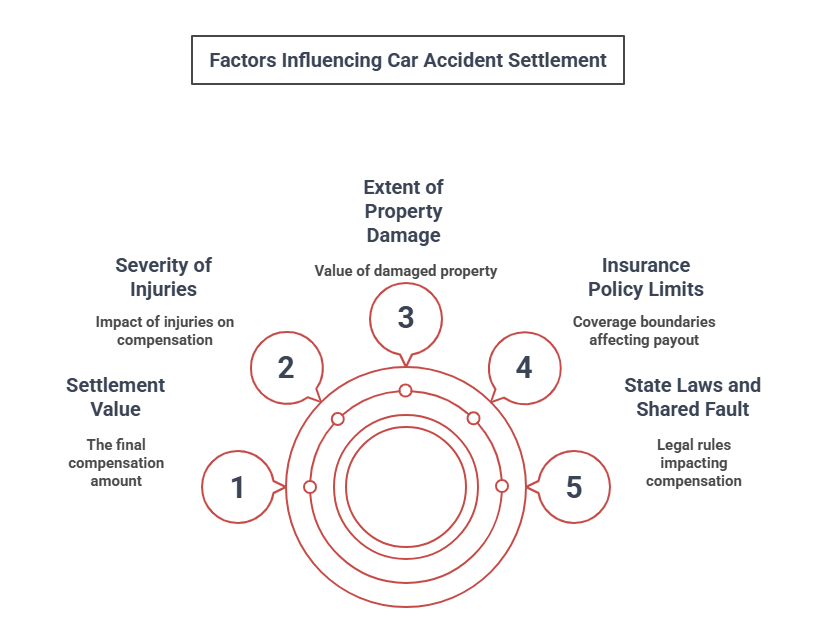
Every car accident claim is unique, and so is its settlement value. While no two cases are exactly alike, certain key factors consistently determine how much compensation a victim may receive. These include the severity of injuries, the extent of property damage, insurance policy limits, and legal considerations such as liability and contributory negligence. Understanding how these elements interact can help you better anticipate what to expect from your claim.
1. Severity of Injuries
The extent and impact of your injuries are often the most influential factors in determining a settlement amount. Serious injuries typically result in:
- Higher immediate and long-term medical expenses
- Extended time away from work (or permanent loss of earning capacity)
- Greater physical pain and emotional distress
- Potential need for ongoing rehabilitation or personal care
Injuries such as fractures, herniated discs, spinal cord damage, or traumatic brain injuries often lead to significantly higher settlements due to their complexity, long-term impact, and associated costs. In contrast, soft tissue injuries—though still valid—may result in more modest settlements unless they lead to complications.
2. Extent of Property Damage
Your settlement also accounts for property damage, primarily to your vehicle but also including any personal belongings that were damaged in the crash (such as laptops, phones, or car seats).
If the vehicle is declared a total loss—meaning the repair cost exceeds the actual cash value (ACV) of the car—you may be entitled to receive the vehicle’s pre-accident market value. Comprehensive documentation, such as repair estimates and receipts, strengthens this part of your claim.
3. Insurance Policy Limits
Insurance coverage is a financial boundary in every personal injury claim. The at-fault driver’s insurance policy will only pay up to its stated limits—even if your damages exceed that amount.
Here’s how common liability limits work:
| Coverage Type | Per Person Limit | Per Accident Limit |
|---|---|---|
| Bodily Injury Liability | $15,000 | $30,000 |
| Property Damage Liability | — | $5,000 |
Note: These reflect typical minimum limits in some states; actual policy limits may be higher.
If your total damages exceed the at-fault driver’s coverage, you may be eligible to file a claim under your uninsured/underinsured motorist (UM/UIM) policy—assuming you’ve purchased that coverage. An attorney can help you explore this option and determine the best path forward.
4. State Laws and Shared Fault
Texas follows a modified comparative fault system. That means if you are partially at fault for the accident, your compensation may be reduced in proportion to your percentage of fault. If you’re found to be more than 50% at fault, you may be barred from recovering any compensation altogether.
This makes clear documentation and strong legal representation critical, especially if the insurance company attempts to shift blame to reduce its payout.
How to Calculate the Value of Your Car Accident Settlement?
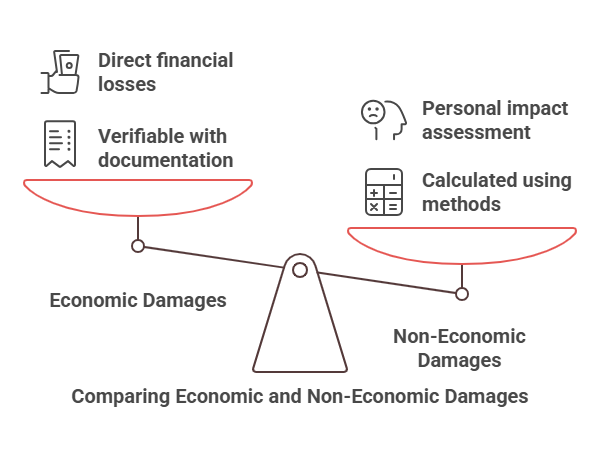
Estimating a fair car accident settlement isn’t just about totaling your bills. A proper calculation must include your actual financial losses, the emotional and physical impact of the accident, and—in rare cases—punitive damages for extreme negligence.
Basic Settlement Formula
Total Settlement = Economic Damages + Non-Economic Damages + Punitive Damages (if applicable)
1. Economic Damages (Tangible Financial Losses)
These include all losses you can verify with documentation:
| Type | Includes |
|---|---|
| Medical Expenses | ER visits, surgery, hospital stays, medications, physical therapy, and future treatments |
| Lost Wages | Income missed due to recovery, supported by pay stubs or employer verification |
| Loss of Earning Capacity | Reduction in your future ability to earn due to long-term injuries |
| Property Damage | Repair or replacement of your vehicle and damaged belongings (phones, electronics, etc.) |
Tip: Save every receipt, bill, and estimate—this documentation will directly impact your claim value.
Example: Calculating Economic Damages
- Medical expenses: $18,500
- Lost wages: $4,000
- Property damage: $3,500
Total Economic Damages = $18,500 + $4,000 + $3,500 = $26,000
2. Non-Economic Damages (Pain, Emotional Distress, and Quality of Life Impact)
These damages reflect the personal toll the accident has taken on your life. Since they’re not tied to receipts, they’re typically calculated using:
Multiplier Method
Economic damages are multiplied by a factor (usually between 1.5 and 5) based on injury severity and recovery time.
Example:
$26,000 × 2.5 = $65,000 in non-economic damages
Per Diem Method
A daily rate (e.g., $150/day) is multiplied by the number of recovery days.
Example:
$150 × 120 days = $18,000
The multiplier method is more commonly used in Texas car accident claims.
3. Punitive Damages (If Applicable)
Punitive damages are awarded only in extreme cases—such as drunk driving or intentional harm. These are meant to punish the at-fault driver and are typically decided in court, not through standard settlement negotiations.
Final Settlement Estimate (Using Multiplier Method)
- Economic damages: $26,000
- Non-economic damages (2.5×): $65,000
- Estimated total settlement: $91,000
Note: Punitive damages would be added separately if applicable.
Why Legal Insight Matters?
Insurance companies often undervalue claims by focusing only on immediate costs. A personal injury attorney—like the team at Titanium Law—can assess the full scope of your losses, apply the right valuation methods, and push for the settlement you truly deserve.
Must Have Documentation: Building a Strong Claim File

Your settlement is only as strong as the evidence behind it. Insurance companies evaluate claims based on proof—not assumptions—so having a detailed, well-organized file is critical. Each document reinforces your losses, supports your version of events, and makes it harder for the insurer to undervalue your claim.
1. Medical Bills and Treatment Records
These records show the nature, severity, and cost of your injuries. Include:
- Emergency room and hospital bills
- Surgical notes and physician summaries
- Prescription receipts and physical therapy plans
- Estimates for future medical treatment, if ongoing care is required
Example: If you underwent surgery and ongoing rehab, including progress reports and long-term care plans can help justify a higher compensation amount.2. Proof of Lost Wages and Earning Capacity
If your injuries caused you to miss work—or impacted your ability to return—you’ll need:
- Pay stubs or bank statements
- Letters from your employer verifying missed time or reduced duties
- Tax returns to show baseline income for self-employed individuals
Example: A letter from your employer stating you missed 6 weeks of work, plus a W-2 showing your typical earnings, gives the insurer concrete numbers to work with.
3. Property Damage Estimates
Insurers won’t just take your word for it. To claim property damage, gather:
- Repair estimates from certified body shops
- Vehicle replacement valuations (for total loss cases)
- Receipts for damaged personal items (phones, laptops, car seats)
- Towing, storage, or rental car invoices
Example: If your laptop was damaged in the crash, include the original receipt or replacement cost as part of your property loss claim.
4. Police Reports
Official crash reports are a critical third-party record. These reports typically include:
- Statements from both drivers
- Diagram of the accident scene
- Citations issued or preliminary fault determination
- Names and contacts of any witnesses
Tip: Request a certified copy of the police report as soon as it’s available.
5. Photographic Evidence
Clear, time-stamped photos can help reconstruct the accident and reinforce your claims. Capture:
- Damage to all vehicles involved
- Skid marks, debris, or road conditions
- Visible injuries (immediately and during recovery)
- Traffic signs or signals at the scene
Example: Photos showing your crushed front bumper and deployed airbag can demonstrate the crash’s force, strengthening your case for physical injury and vehicle loss.
6. Witness Statements
Firsthand accounts from neutral observers can:
- Support your version of the accident
- Undermine false claims from the other driver
- Help establish liability, especially in “word vs. word” cases
Tip: Gather statements early while memories are fresh. Written or recorded statements work best.
When all of these documents are organized and available, they give your attorney—and your case—credibility and leverage. Strong evidence reduces delays, discourages lowball offers, and positions you for a fair outcome.
Writing a Demand Letter That Strengthens Your Case

Your demand letter isn’t just a formality—it’s the foundation of your settlement strategy. Done well, it communicates the full scope of your losses, proves liability, and sets the tone for negotiations with the insurance company.
Here’s how to make yours stand out:
1. Summarize the Accident Objectively
Start with the basic facts: the date, time, and location of the auto accident. Provide a clear, factual account of how the collision occurred and why the other driver was at fault. Refer to the police report, crash diagram, or witness statements to support your version of events.
2. Detail Your Injuries and Medical Treatment
List all injuries sustained and describe the treatment required—from emergency care to physical therapy. Be specific about surgeries, prescriptions, recovery timelines, and any ongoing or permanent effects. Include supporting documentation such as medical records, discharge summaries, and treatment plans.
3. Itemize Your Economic Damages
Break down every financial loss backed by receipts, bills, and reports. This includes:
- Hospital and medical expenses
- Lost wages due to missed work
- Property damage or replacement costs
- Transportation, prescriptions, and out-of-pocket expenses
The more precise and documented this section is, the harder it is for insurers to dispute.
4. Explain Non-Economic Damages
Describe how the accident affected your quality of life. This could include physical pain, emotional distress, sleep disruptions, anxiety, or inability to enjoy hobbies. Use therapy notes, journals, or a physician’s report to support your claims—even subjective losses carry real weight.
5. State a Specific Settlement Amount and Justify It
Clearly present the total amount you’re seeking and explain how you arrived at that figure. Whether you’re using a multiplier based on economic damages or a per diem method, make sure the logic is sound. Justify the amount based on the severity of the accident, the medical impact, and the long-term consequences on your life.
When Should You Talk to a Personal Injury Attorney?
Some car accident cases are straightforward—but others quickly become complicated. If you’re facing severe injuries, unclear fault, or resistance from the insurance company, legal guidance can make a critical difference.
Before making decisions that affect your recovery or long-term finances, it helps to understand where you stand. A free consultation with Titanium Law can give you just that—clarity, without pressure.
Based in Katy, Titanium Law focuses exclusively on Texas auto accident cases, including car crashes, truck accidents, and complex claims involving uninsured drivers or multiple parties. They help clients:
- Estimate the full value of their claim, including future medical costs and lost earning capacity
- Push back against lowball settlement offers from insurance companies
- Handle all paperwork and negotiations, so you can focus on healing
- Take legal action quickly if the insurer delays, denies, or disputes your claim
Even if you’re unsure whether you need an attorney, starting with a conversation ensures you’re not navigating critical decisions alone.
Conclusion
After a serious accident, every dollar in your settlement matters. It’s not just about fixing a car or paying a bill—it’s about covering weeks of lost income, ongoing medical care, and the emotional toll that doesn’t show up on a receipt.
The difference between an average settlement and a full, fair one often comes down to preparation. Every day you wait can weaken your case. Insurance companies move fast—and they count on you not knowing what you’re entitled to. The sooner you take control, the stronger your outcome can be.
If you’re facing a complex case, disputed fault, or an insurance company that’s not playing fair, don’t leave your financial future to chance. The sooner you involve a personal injury attorney, the more control you have over the outcome.
At Titanium Law, we don’t let insurance companies drag their feet or lowball your claim. We fight to get you the compensation you deserve—fast, and on your terms.
Frequently Asked Questions
How long does a typical car accident settlement take?
The timeline for a car accident settlement depends on several factors, including the severity of the injuries, availability of insurance coverage, and whether the other driver’s liability is disputed. In many auto accident cases, the settlement process can take anywhere from a few months to over a year—especially if a personal injury lawsuit is required. Consulting a car accident attorney early on can help speed up the timeline and secure full compensation.
What is a reasonable amount to expect from a car accident settlement?
Typical car accident settlement amounts vary widely. For minor injuries and property damage, the average car accident settlement may fall between $10,000 and $50,000. In cases involving severe injuries, permanent disability, or significant medical costs, the compensation can be much higher. The final value often depends on medical records, lost wages, the degree of fault under the comparative negligence rule, and the available auto insurance or liability coverage.
Can you renegotiate a car accident settlement offer?
Yes, you can renegotiate a car accident injury settlement offer—especially if it doesn’t cover your full medical attention costs, personal property loss, or ongoing care needs. However, once a personal injury settlement is signed, it typically waives your right to pursue additional compensation, even if new issues like permanent disability arise. Always speak with a personal injury lawyer before accepting any offer from the other driver’s insurance provider.
When should I hire a car accident attorney?
Hiring a car accident lawyer is critical when you’re dealing with severe injuries, high medical costs, or disputed liability. An experienced personal injury lawyer plays a critical role in documenting your car crash injuries, gathering evidence, valuing your personal injury settlement, and negotiating with auto insurance adjusters. Many firms, including Titanium Law, offer a free consultation to help you understand your legal options.
What if the other driver doesn’t have enough insurance?
If the at-fault driver’s liability coverage is insufficient, you may need to file a claim under your own uninsured/underinsured motorist policy. A knowledgeable car accident attorney can help evaluate the available insurance coverage and pursue additional compensation where possible—especially in complex cases like a truck accident or multi-vehicle car accident injury claim.
How does Texas law affect my car accident lawsuit?
Texas follows the modified comparative negligence rule. If you’re found to be 51% or more at fault for the auto accident, you cannot recover damages. If you’re less than 51% at fault, your compensation will be reduced proportionally. This legal standard plays a critical role in car accident injury settlement outcomes. You also have a limited time—generally two years—to file a car accident lawsuit under the Texas statute of limitations.