

Dealing with the aftermath of a hit-and-run accident can feel overwhelming. The financial strain from medical bills and property damage is hard enough, but when the responsible driver is nowhere to be found, it only adds to the stress. Understanding how settlement amounts are determined is key to navigating this complex situation.
Factors like the severity of injuries and the nuances of insurance coverage come into play. With the right legal representation, victims can build a strong case, ensuring they receive the compensation they deserve while having a trusted guide through the legal maze.
What’s the Average Settlement for a Hit and Run Car Accident—and How Can You Maximize Yours?

The average settlement for a hit-and-run car accident typically falls between $10,000 and $200,000, but it can exceed that amount in cases involving permanent injury or severe trauma.
Hit-and-run accidents in the United States present unique challenges for victims seeking compensation through a car accident claim. To determine your eligibility for recovery and the value of a settlement, consider requesting a free case evaluation. Settlement amounts can vary widely based on factors such as injury severity, property damage, and insurance coverage. Here’s an overview of average settlements and strategies to potentially increase your compensation.
Settlement amounts can vary significantly based on injury severity, property damage, and available insurance. Below is a breakdown of typical settlement ranges based on the impact of the accident:
Average Settlement Amounts
1. Minor Injuries and Property Damage
Settlements usually range from $10,000 to $50,000, covering basic medical treatment, vehicle repairs, and short-term lost income.
2. Moderate to Severe Injuries
For injuries requiring extended medical care or rehabilitation, settlements often fall between $50,000 and $200,000.
3. Permanent Disabilities or Life-Altering Injuries
Severe cases involving permanent impairment or major lifestyle changes can result in settlements of $200,000 or more, sometimes reaching millions, depending on long-term care needs, lost future earnings, and pain and suffering.
Steps to Maximize Your Settlement
- Document Everything
Collect medical reports, police files, witness statements, and photos of the scene and injuries. - Seek Immediate Medical Attention
Prompt treatment creates a verifiable record of injuries, which strengthens your claim. - Consult a Personal Injury Attorney for personal injury protection advice. An experienced lawyer in Kansas City can negotiate with insurers and build a strong case to pursue maximum compensation.
- Understand Your Insurance Policy
Review your uninsured/underinsured motorist coverage and know your limits. - Act Quickly
Filing claims and taking legal action within deadlines is critical to preserving your right to compensation.
What Determines the Settlement Amount in a Hit and Run Accident?
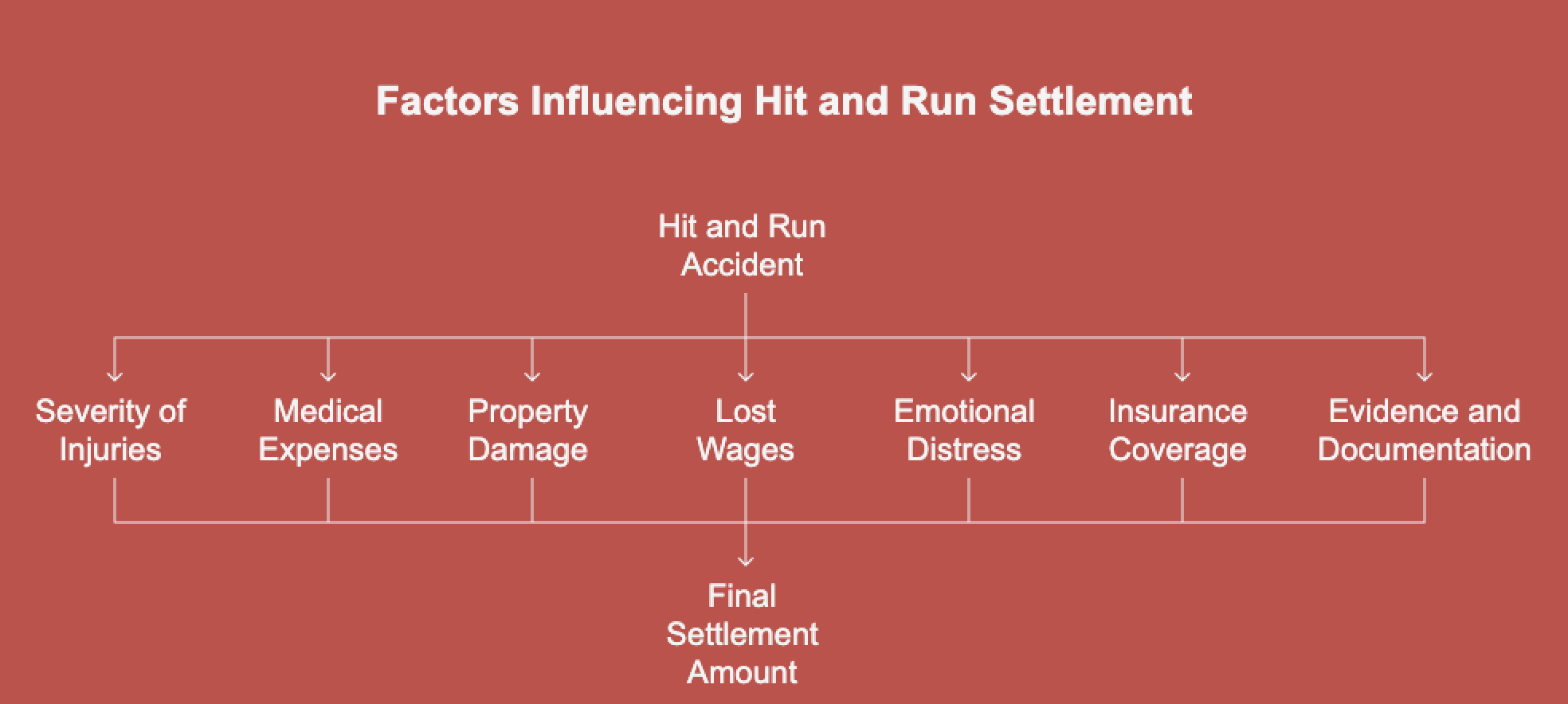 When you’re the victim of a hit-and-run car accident, you’re left dealing with more than just vehicle damage. Medical bills, emotional distress, and time away from work can quickly add up. But how is the settlement amount calculated in these situations? Several key factors influence how much compensation you may be entitled to.
1. Severity of Injuries
The more serious your injuries, the higher the potential settlement. Minor cuts and bruises won’t carry the same weight as broken bones, internal injuries, or permanent disability. Insurance companies and courts heavily weigh the physical toll of the accident, including future medical bills.
2. Medical Expenses and Future Treatment
Your current medical bills are just the beginning. If you need ongoing treatment like physical therapy, surgeries, or long-term medication, those future costs will also be considered in your claim.
3. Property Damage
Repairs or replacement of your vehicle are another major factor. The more extensive the damage, the more compensation you can expect for property loss—especially if the car is totaled or custom-built.
4. Lost Wages and Earning Capacity
If the accident forces you to miss work, you may be compensated for lost income. If your injuries affect your ability to return to your previous job or reduce your earning capacity long-term, that will significantly increase the settlement value.
5. Emotional Distress and Pain
Pain and suffering may not be visible, but they’re real. Courts and insurers often include compensation for emotional trauma, anxiety, and loss of enjoyment of life in hit and run cases, especially if the incident had lasting psychological effects.
Curious how it all began? Check out the first recorded car accident here.
6. Insurance Coverage
Whether or not the at-fault driver is found and insured plays a big role. If the driver remains unidentified, your own uninsured motorist coverage may come into play, which can limit the payout based on your policy limits.
7. Evidence and Documentation
The strength of your evidence—from police reports and witness statements to medical records and surveillance footage—can dramatically affect your settlement. The clearer the proof, the stronger your case.
How Settlements Are Calculated for Hit and Run Incidents?

Settlements for hit and run accidents are based on a combination of economic and non-economic damages, and the process becomes more complex if the at-fault driver is not identified. Insurers typically follow a structured approach using formulas, multipliers, and policy limits to calculate payouts, and punitive damages may also be considered in certain cases.
1. Economic Damages (Tangible Losses)
These are direct, measurable costs that include:
a. Medical Expenses (Past + Future)
This includes hospital bills, surgery, physical therapy, medication, and long-term care.
Formula: Total Medical Bills = Sum of All Past and Projected Medical Costs
Example: If your past medical bills are $12,000 and your doctor estimates $8,000 in future treatment, your total medical expenses would be $20,000.
b. Lost Wages
If injuries caused time off work or reduced future earning capacity.
Formula: Lost Wages = Daily Wage × Number of Missed Workdays
If your earning potential is affected long term, future lost income is added based on your profession, age, and limitations.
Example: If you earn $250 per day and miss 40 workdays, your lost wages would total $10,000.
c. Property Damage
This includes the cost of vehicle repairs or the market value of the vehicle if it’s totaled.
Formula: Property Damage = Cost of Repairs or (Actual Cash Value – Salvage Value)
Example: If your car’s repair costs total $6,500, that would be your claim amount. If the vehicle is totaled and valued at $15,000 with a $2,000 salvage value, your compensation would be $13,000.
2. Non-Economic Damages (Pain and Suffering)
These are subjective but compensable damages like emotional distress, chronic pain, and loss of quality of life.
a. Multiplier Method
The most common approach. A multiplier (typically between 1.5 and 5) is applied to the total economic damages based on injury severity.
Formula: Pain and Suffering = Economic Damages × Multiplier
For example, if your economic damages are $20,000 and the injury is moderate (multiplier = 2.5), then pain and suffering would be $50,000.
b. Per Diem Method
Less commonly used. A daily dollar amount is assigned for each day of recovery.
Formula: Pain and Suffering = Daily Rate × Number of Days of Recovery
Example: $200/day × 90 days = $18,000
3. Insurance Policy Limits
If the hit and run driver isn’t found, your uninsured motorist (UM) policy determines the maximum payout for your auto insurance coverage, which must meet the minimum liability coverage requirement. Even if your damages are high, you cannot collect more than your policy allows.
Formula:
Final Settlement = (Economic + Non-Economic Damages), capped by UM policy limits
a. Role of Evidence
The strength of evidence affects how much insurers are willing to pay. Medical records, police reports, photos, and witness statements can validate your claim and support higher compensation.
What Are the Crucial Steps You Must Take Right After a Hit and Run Accident?
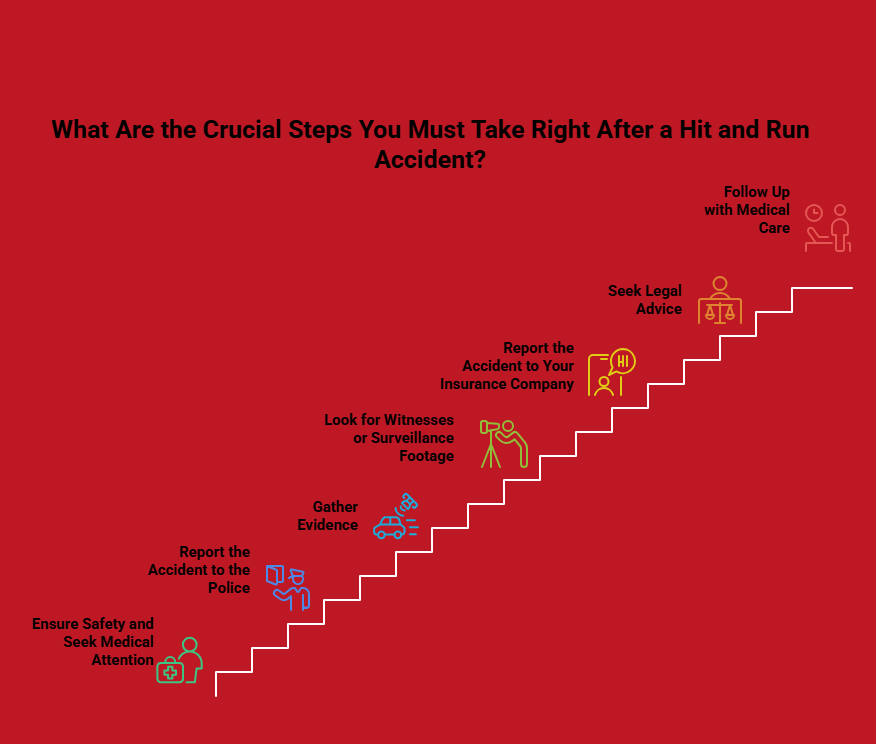
A hit-and-run accident can be overwhelming, but it’s crucial to remain calm and take specific steps to protect your well-being and your legal rights. Here’s what you should do immediately after a hit-and-run incident:
1. Ensure Safety and Seek Medical Attention
First and foremost, make sure you and anyone else involved in the accident are safe. If possible, move your vehicle to a safe location away from traffic. Call emergency services to report the accident and request medical help, even if you don’t feel injured. Some injuries may not be immediately apparent, so it’s important to get checked out.
2. Report the Accident to the Police
Contact the police and file an official report. Be sure to provide as much detail as possible, including the location, time, and any information about the vehicle that fled (such as its make, model, color, and license plate number, if visible). A police report is essential for both insurance claims and any legal actions.
3. Gather Evidence
If you’re physically able, document the scene. Take photos of the accident, vehicle damage, your injuries, and the surrounding area. If there are any nearby traffic cameras or surveillance cameras, note their locations. Speak with any witnesses and collect their contact information, as their statements could help identify the at-fault driver.
4. Look for Witnesses or Surveillance Footage
Talk to people who may have seen the accident. Their accounts can provide crucial details that may help authorities track down the hit-and-run driver. Additionally, check for nearby businesses or homes with security cameras that might have captured the incident.
5. Report the Accident to Your Insurance Company
Notify your insurance company about the hit-and-run accident as soon as possible. Provide them with all the details of the incident, including the police report number and any evidence you’ve gathered. If you have uninsured/underinsured motorist coverage, your policy may cover your damages even if the at-fault driver is not found.
6. Seek Legal Advice
Consult a personal injury attorney who specializes in car accident cases and hit-and-run accidents. An experienced lawyer can help you navigate the legal process and complexities of your case, including the formation of a lawyer to handle insurance claims, tracking down the responsible driver, and ensuring you receive fair compensation for your injuries and damages while fostering a strong client relationship.
7. Follow Up with Medical Care
After your initial medical treatment, follow through with any recommended follow-up care. Keeping records of all medical visits, treatments, and bills is important for your case, especially if you pursue a claim for pain and suffering, lost wages, or long-term care needs.
By following these steps, you protect your safety, strengthen your case, and increase the likelihood of recovering compensation for your injuries and damages.
Also read: How Long Do You Have to Report a Car Accident in Texas to Your Insurance Company? Here’s the Truth.
Why Titanium Law is Your Best Ally After a Hit and Run Accident in Katy, Texas
When you’ve been the victim of a hit-and-run accident in Katy, Texas, navigating the complexities of insurance claims and settlements can be overwhelming. That’s where Titanium Law comes in. Our expert team of personal injury lawyers specializes in hit-and-run cases, helping you secure the compensation you deserve.
At Titanium Law, we understand that every accident is unique, and we’re committed to providing personalized legal representation. From gathering crucial evidence to negotiating with insurance companies, we’ll guide you through every step of the process. We’ll ensure that your injuries, property damage, lost wages, and pain and suffering are thoroughly documented and presented in the strongest possible way.
Whether the at-fault driver is identified or not, Titanium Law has the experience to fight for your best interests, maximizing your settlement through careful negotiation and skilled legal tactics. We are dedicated to ensuring you receive fair compensation, covering both immediate costs and long-term needs. With Titanium Law on your side, you don’t have to navigate the aftermath of a hit-and-run accident alone. Let us handle the complexities so you can focus on recovery.
Reach out to Titanium Law today, and let us help you get the justice you deserve. Schedule a free consultation with us now.
Conclusion
Hit-and-run accidents can be overwhelming, but the right steps can make a big difference in your compensation. Factors like insurance, fault, injury severity, and state traffic laws all impact your claim. Acting fast—documenting the scene, reporting to authorities, and getting medical help—strengthens your case. An experienced attorney can navigate the legal maze, fight for fair compensation, and guide you through negotiations. With the right support, you can secure the justice and recovery you deserve.
Frequently Asked Questions
What is the average settlement for hit and run accidents?
Though it varies with several factors, a rough average car accident settlement of hit and run accident settlement is estimated at around $37,248.62, according to the Insurance Information Institute. However, settlements involving personal injury cases and major damages may secure higher payouts, ultimately affecting the final settlement amount awarded.
Can I claim for emotional distress in a hit and run case?
Yes, emotional distress resulting from a hit and run accident is usually considered a part of non-economic damages in personal injury claims. The pain, suffering, and emotional trauma you undergo are compensable elements in your settlement.
How long do settlement negotiations typically take?
The duration for settlement negotiations solely depends on the complexity of your case, the amount claimed, and the willingness of the involved insurance company. It could range from a few weeks to several months or possibly longer if the case reaches litigation stages.
What if the at-fault driver is never found?
In the case of hit and run accidents where the at-fault driver cannot be identified, victims can invoke their own policy’s Uninsured Motorist (UM) coverage and UIM coverage, which is designed to cover injuries caused by uninsured or unidentified drivers, depending on the circumstances of the accident.
Is legal representation necessary for a hit and run settlement?
While not mandatory, having an experienced attorney can greatly help in navigating the complexities of a hit and run case, starting from collecting evidence, understanding insurance procedures, perfecting negotiation tactics to ensuring a fair settlement. Their expertise might prove instrumental in maximizing your compensation.